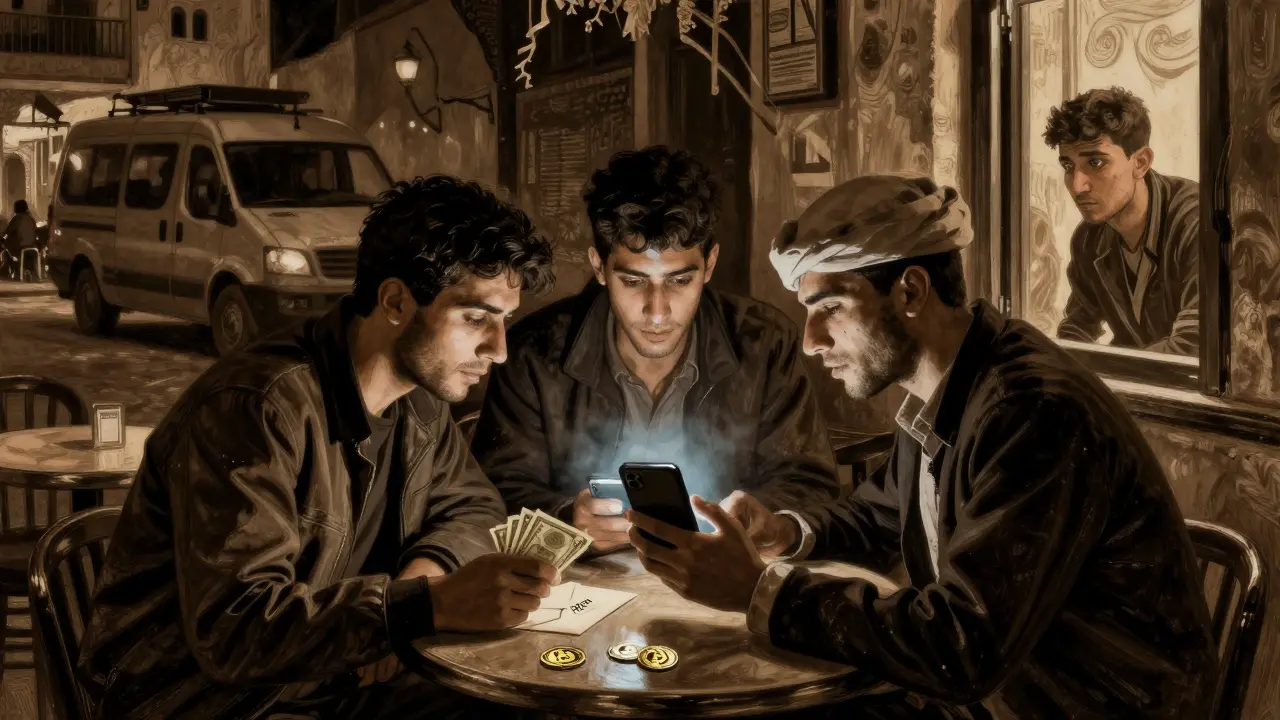
On paper, cryptocurrency is illegal in Tunisia. Since May 2018, the Central Bank of Tunisia (BCT) has banned all crypto transactions-no buying, selling, or holding Bitcoin, Ethereum, or USDT is allowed under the law. But if you walk through the streets of Tunis, Sfax, or Bizerte, you’ll find dozens of young people quietly trading crypto using their phones. They’re not breaking the law because they’re reckless-they’re doing it because they have no other choice.
Why Did Tunisia Ban Crypto?
The ban wasn’t random. Tunisia’s financial system is built on strict Islamic finance rules and state-controlled banking. The BCT feared crypto could undermine the Tunisian Dinar, enable money laundering, or destabilize the economy. They saw crypto as a threat to their control over money flows. So they shut it down completely. No gray area. No exceptions. But here’s the twist: the ban didn’t stop crypto. It just pushed it underground.How Do People Trade Crypto in Tunisia Today?
Tunisians don’t use local exchanges-there aren’t any. Instead, they rely on global peer-to-peer (P2P) platforms like Binance P2P and a decentralized trading system that connects buyers and sellers directly without a central authority. These platforms let users trade crypto for cash, mobile money, or even gift cards. The most popular coins? Bitcoin, Ethereum, and USDT. USDT is especially common because it’s pegged to the US dollar, making it a stable way to protect savings from inflation. Tunisia’s currency has lost over 40% of its value since 2018. Many people see crypto as their only real hedge. To access these platforms, traders use VPNs and a tool that masks internet traffic to bypass government blocks on crypto websites. The government blocks known crypto sites, but new ones pop up constantly. Traders switch between platforms like KuCoin, a global exchange offering low-fee trading and support for hundreds of altcoins, MEXC, a platform popular for its advanced trading tools and margin options, and OKX, a major exchange with strong P2P infrastructure.The Cash Problem: How Do You Turn Crypto Into Dinars?
This is the biggest hurdle. Tunisian banks block any transaction linked to crypto. If you try to deposit money from a crypto sale into your bank account, it gets flagged. Your account might freeze. You could get called in for questioning. So traders invented workarounds. Some use cash meetups-buyers and sellers meet in cafes or malls to swap crypto for cash. Others use third-party intermediaries who accept crypto and pay out in dinars through unofficial channels. A few even use the Poste Tunisienne, the national postal service that offers money transfer services to move funds, though this carries legal risk. A 2023 study by a Tunisian tech think tank found that 72% of crypto users rely on cash-based methods to convert their holdings. It’s messy, slow, and risky-but it works.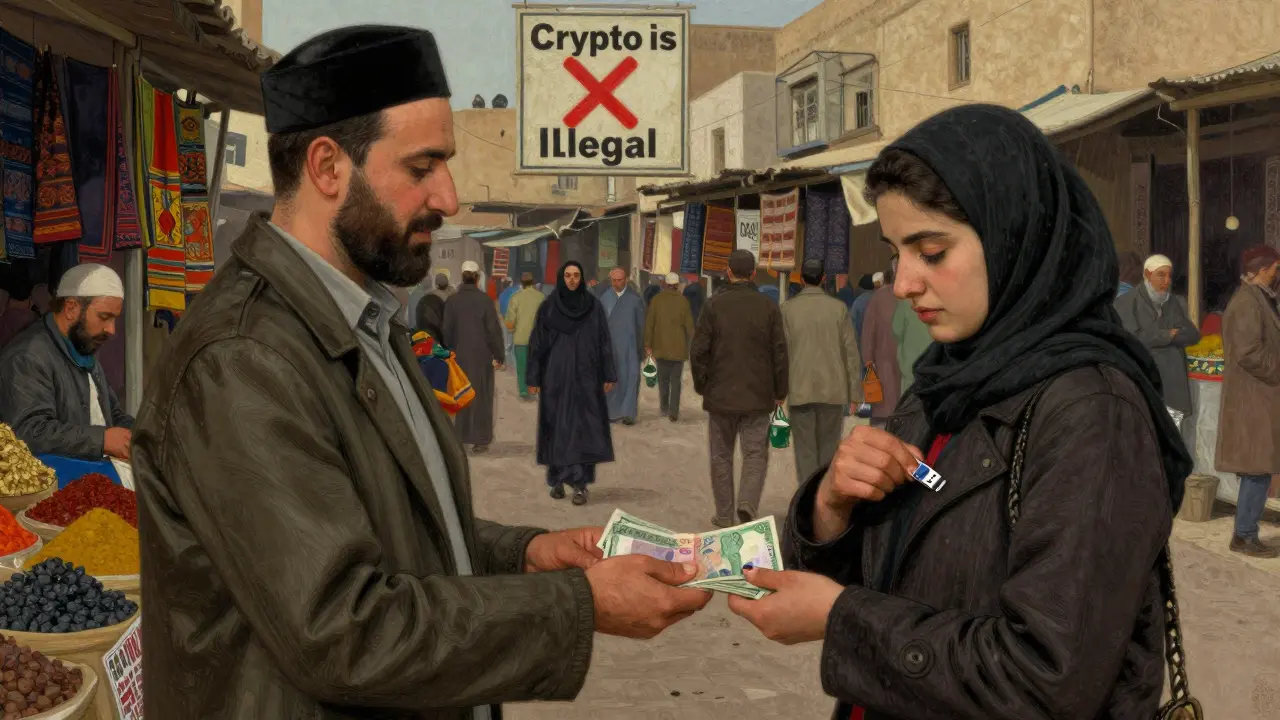
The Legal Risks Are Real
In 2021, a 17-year-old in Sousse was arrested for running a small crypto exchange on Telegram. He was jailed for three months. His case made national news and sparked debates in parliament. Since then, the BCT has increased monitoring. Banks now use AI systems to detect patterns linked to crypto trading-like sudden large deposits from unknown sources or frequent transfers to foreign wallets. The law says crypto trading is a criminal offense. Penalties include fines up to 50,000 Tunisian Dinars (about $16,000 USD) and up to three years in prison. But enforcement is patchy. Most cases only happen when someone gets caught in a money laundering investigation or when a bank reports suspicious activity. Still, the threat is enough to keep most traders cautious. They never use their real names on P2P platforms. They use burner phones. They avoid sharing screenshots. They never talk about crypto in public.The Hypocrisy: The Government Builds Blockchain While Banning Crypto
Here’s the strangest part: while citizens risk jail for trading Bitcoin, the Tunisian government is quietly investing in blockchain technology. The Ministry of Communications is testing a Central Bank Digital Currency (CBDC), a digital version of the Tunisian Dinar issued and controlled by the central bank. They’ve partnered with international firms to build a blockchain-based payment system for public services. The goal? To reduce fraud and improve efficiency. But here’s the contradiction: the CBDC is centralized. The government controls it. Crypto is decentralized. That’s the difference. The state wants digital money-but only if it can monitor every transaction. Citizens want money they can control themselves. That’s why the underground market keeps growing.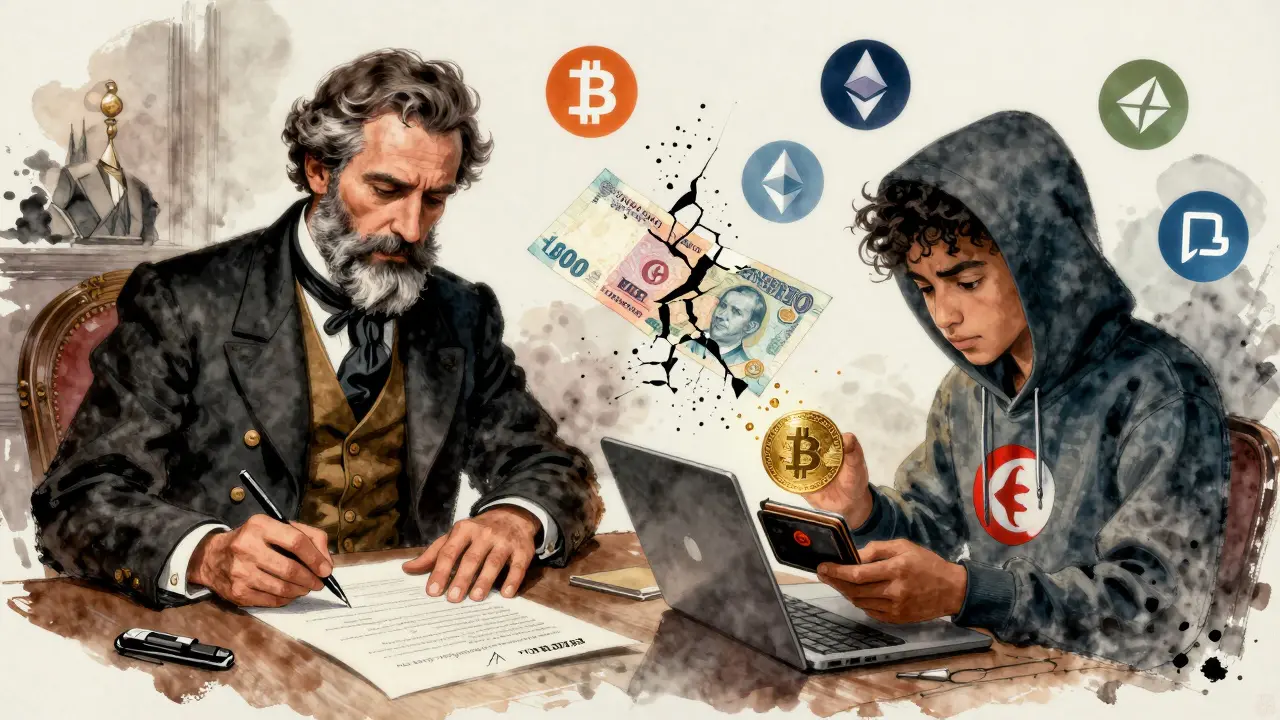
Who’s Leaving-and Why
The brain drain is real. Young Tunisian developers, engineers, and crypto entrepreneurs are packing up and moving. Canada, Switzerland, and Portugal now have thriving Tunisian crypto communities. One startup founder I spoke with moved to Lisbon in 2023. "I built a DeFi tool here," he told me. "In Tunisia, I’d be in jail. Here, I can get a visa, open a bank account, and hire a team." According to a 2025 survey by the Tunisian Tech Network, over 1,200 crypto-related professionals have left the country since 2020. That’s not just talent-it’s innovation, investment, and future tax revenue leaving with them.Is Change Coming?
There are signs. In late 2025, a parliamentary committee proposed a draft bill to decriminalize personal crypto possession and create a licensing system for P2P trading platforms. The idea? Regulate it instead of punishing it. The BCT has also started talking about fintech licenses for blockchain startups. They’re not ready to legalize Bitcoin-but they’re starting to admit that banning it didn’t work. Still, no timeline exists. No vote is scheduled. The ban remains in full force.What’s Next for Underground Crypto in Tunisia?
The underground market isn’t going away. It’s getting smarter. More Tunisians are learning how to use cold wallets, multi-signature accounts, and privacy tools like Monero. Some are even experimenting with NFTs and decentralized apps (dApps) that don’t involve buying or selling-just using blockchain for identity or record-keeping, which isn’t illegal. The government’s strategy-ban, monitor, punish-is failing. People still trade. The tech still evolves. The demand for financial freedom hasn’t faded. Eventually, the law will have to change. Not because it’s right. But because it’s impossible to enforce.Is it legal to own cryptocurrency in Tunisia?
No. The Central Bank of Tunisia banned all cryptocurrency transactions in May 2018. Owning, trading, or exchanging crypto is considered illegal under current law. Even holding crypto in a wallet can lead to legal scrutiny if detected by bank monitoring systems.
Can I use Binance or KuCoin in Tunisia?
Technically, no. These platforms are blocked by the government. But many Tunisians access them using VPNs. Binance P2P is the most popular method for trading crypto for cash. Using these services still violates Tunisian law, and users risk account freezes or legal action if detected.
What happens if my bank account is flagged for crypto activity?
Your account may be frozen immediately. The bank will report the activity to the Tunisian Financial Analysis Committee (CTAF). You could be called in for questioning, required to prove the source of funds, or even face criminal charges if the transaction is linked to suspected money laundering or illegal crypto trading.
Why doesn’t the government just legalize crypto?
The government fears losing control over the financial system. Crypto operates outside state oversight, which conflicts with Tunisia’s strict banking laws and Islamic finance principles. However, they are developing their own Central Bank Digital Currency (CBDC), which gives them full control-unlike decentralized crypto.
Are there any legal crypto businesses in Tunisia?
No licensed cryptocurrency exchanges operate in Tunisia. However, some tech firms work on blockchain applications for supply chain tracking or voting systems, which are not classified as crypto trading and are therefore not illegal. These projects often avoid mentioning Bitcoin or Ethereum to stay under the radar.
This is the most beautiful act of civil disobedience I've ever seen. People aren't breaking the law because they're stupid-they're doing it because the law is a joke. The government bans crypto but builds its own blockchain? That's not policy. That's hypocrisy with a PowerPoint presentation. I'm not even mad. I'm impressed.
Crypto is just gambling with extra steps
You know what's wild? The fact that Tunisians are using USDT to dodge inflation while the US government is trying to regulate every crypto transaction. We're the ones screaming about freedom but we're the ones with the surveillance state. Meanwhile, these kids in Tunis are building a parallel economy with just their phones and a VPN. That's not rebellion. That's evolution.
This is such an important story. I've been following crypto adoption in emerging markets for years, and Tunisia is a perfect example of how innovation thrives under oppression. The fact that they're using Poste Tunisienne for cash transfers? Genius. It's low-tech, high-trust, and hard to trace. We in the West think blockchain is about tech-but here, it's about survival. We should be learning from them, not judging.
Let me guess-the CIA funded this. The US government wants Tunisia to become a crypto hub so they can monitor every transaction through Binance P2P. The CBDC? A trap. The real goal is to get all these Tunisians to use digital wallets so they can be tracked, taxed, and controlled. The ban? A smokescreen. The real war isn't against crypto-it's against privacy. And if you think your bank isn't sharing your data with the NSA, you're even more naive than I thought.
This is why I love the internet 💖
The central bank's fear of decentralization is a metaphysical terror. They're not scared of money laundering-they're scared of epistemic rupture. When citizens stop relying on institutional authority to validate value, the entire symbolic order of the state begins to collapse. Crypto isn't a currency-it's a hermeneutic rebellion. And the CBDC? That's just capitalism with better UX.
I lived in Tunis for a year teaching English. What you don't see in the article is how tight-knit the community is. These kids have entire WhatsApp groups with rules: no real names, no photos of cash, always meet in public, always check for tails. One guy told me he teaches his little sister how to use a cold wallet before she learns to ride a bike. That's not illegal activity-that's cultural transmission. This isn't a black market. It's a new social contract.
People think they're smart using VPNs but they're just playing with fire. You think the government doesn't know who's doing this? Of course they do. They're waiting. One day, they'll sweep up everyone at once. And you'll be lucky if you just get fined. These people are naive. They think they're rebels. They're just sitting ducks with a crypto wallet
So they're using USDT to avoid inflation... wow what a shocker. Next you'll tell me water is wet
While I appreciate the entrepreneurial spirit, I must emphasize the importance of regulatory compliance and institutional integrity. The Tunisian government's position, though seemingly rigid, is anchored in macroeconomic stability and adherence to Islamic financial principles. The proliferation of unregulated digital assets, even in the face of inflation, poses systemic risks that cannot be mitigated through peer-to-peer meetups or postal transfers. A structured, licensed, and transparent framework-however slow-is preferable to chaotic, clandestine networks. We must not confuse resistance with progress.
I knew it. The moon landing was fake. The pandemic was a hoax. And now this? The BCT is just a front for the Illuminati. They banned crypto so they could make everyone use their own blockchain and then implant microchips via mobile top-ups. The Poste Tunisienne? That's the real gateway. You think people are trading USDT? Nah. They're syncing their neural IDs. I saw a guy in Bizerte whispering to his phone. He was saying 'blockchain is freedom'... but his eyes were glowing.
I've worked with fintech teams in several African countries, and what's happening in Tunisia is one of the clearest examples of grassroots innovation I've seen. The government's ban didn't kill crypto-it made it more resilient. People aren't just trading-they're building trust systems from scratch. Cold wallets, multi-sig, cash meetups-it's all decentralized finance in its purest form. The real story isn't the ban. It's how ordinary people created a financial system no one authorized.