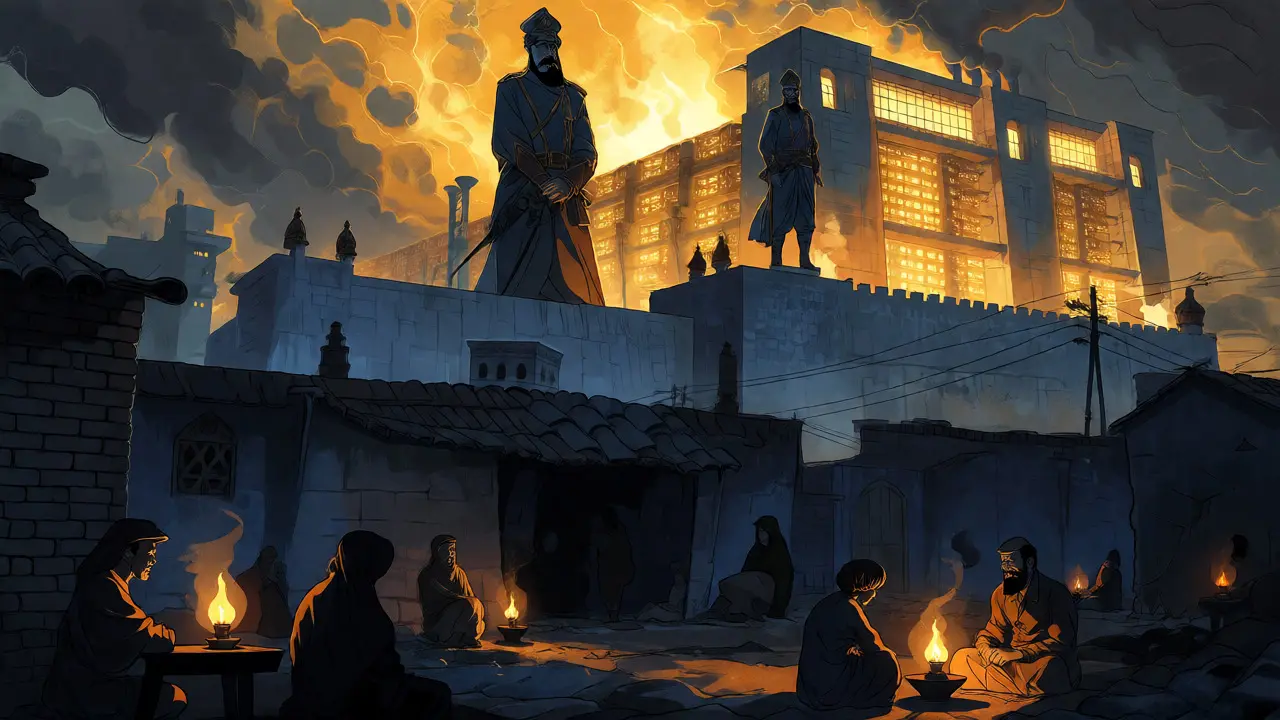
Imagine your city going dark for hours every day because a military group is running thousands of computers in the background to mine digital gold. That is not a dystopian novel; it is the current reality in parts of Iran. While ordinary families struggle with rolling blackouts and factories shut down mid-shift, the Islamic Revolutionary Guard Corps (IRGC) has quietly built a massive, largely unregulated cryptocurrency empire. This isn't just about tech enthusiasts chasing Bitcoin. It is a strategic maneuver by one of the world's most powerful military organizations to bypass international sanctions, exploit subsidized state resources, and fund geopolitical ambitions without leaving a traditional banking trail.
The situation creates a bizarre paradox. On paper, Iran recognized cryptocurrency mining as a legal industry back in 2019. In practice, the sector has been hijacked by state-affiliated entities that operate outside standard market rules. The result is a two-tiered system where regime-connected miners enjoy free or heavily subsidized electricity while private citizens and independent businesses pay premium rates or get cut off entirely. To understand how this works, you have to look past the blockchain hype and see the hard infrastructure underneath: power plants, transmission lines, and political protection.
The Sanctions Evasion Engine
Why would a military organization care about Bitcoin? Because traditional money is tracked. When the US Treasury Department imposes sanctions, it cuts off access to the SWIFT network and dollar-based banking. For a country like Iran, which relies on oil exports but faces severe restrictions on moving those revenues, cryptocurrency offers a lifeline. The Central Bank of Iran (CBI) has long struggled to keep foreign currency flowing into the economy. By converting domestic resources-specifically cheap electricity-into global assets like Bitcoin, the regime can move value across borders without touching the Western financial system.
This process transforms local energy into international purchasing power. Unlike bank transfers that require multiple verifications and leave clear audit trails, crypto transactions happen directly between digital wallets. Two-way encryption allows parties to remain largely anonymous, making it difficult for intelligence agencies to trace every dollar spent. Reports from the Associated Press indicate that both US and Israeli intelligence have targeted specific Bitcoin wallets linked to IRGC operations. These funds reportedly finance proxy groups involved in regional conflicts, effectively turning mined coins into weapons and logistics support. The blockchain becomes a shadow ledger for war chests.
Who Actually Controls the Miners?
You might assume that if mining is legal, there are hundreds of small companies competing for space. The data tells a different story. Estimates suggest that well over half of all active mining hardware in Iran is controlled by state-related entities. Out of approximately 180,000 active mining devices, around 80,000 are in private hands. The remaining bulk-potentially up to 100,000 units-belongs to direct state or quasi-state organizations. This concentration of power means the IRGC and its partners don't just participate in the market; they dominate it.
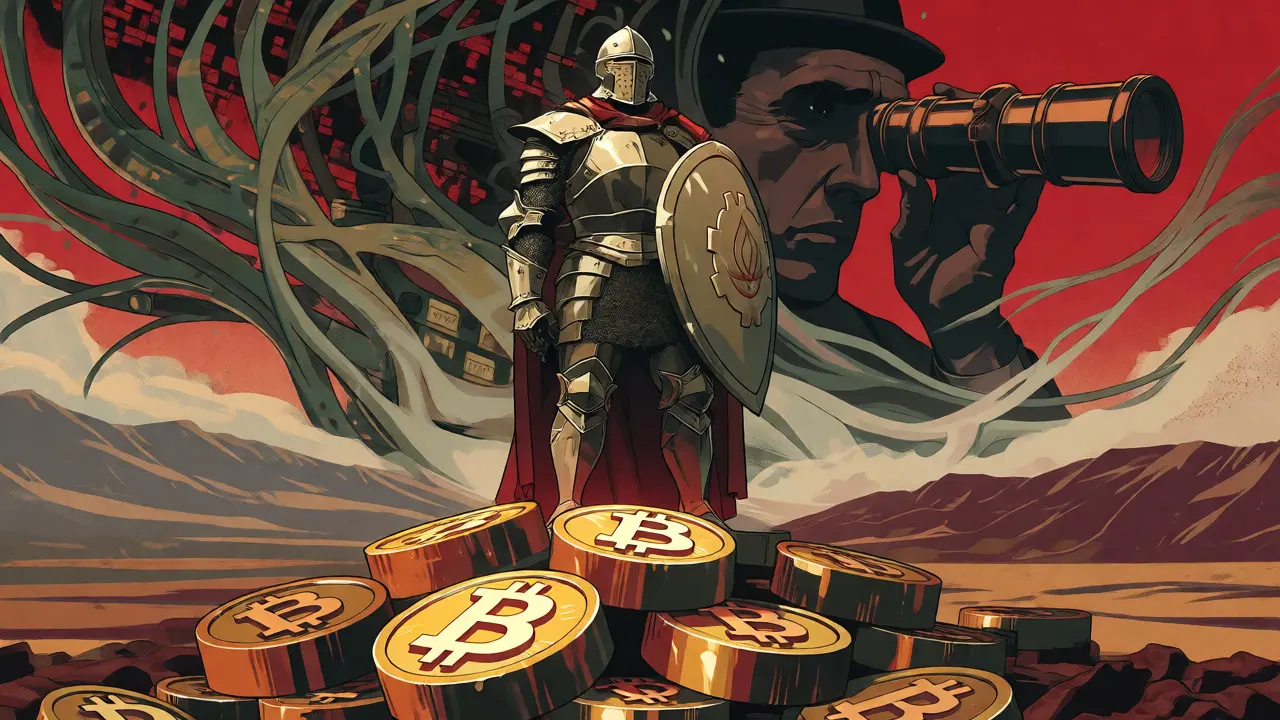
A key player here is Astan Quds Razavi, a massive religious foundation and charitable trust under the supervision of Supreme Leader Ali Khamenei. Alongside other "bonyads" (religious foundations), these entities form what investigators call a de facto cryptocurrency monopoly. They operate large-scale farms, such as the 175-megawatt facility in Rafsanjan, Kerman Province. This site was structured as a joint venture between an IRGC-affiliated enterprise and foreign investors, primarily from China. The partnership makes sense: Chinese firms bring the high-end ASIC miners and technical expertise, while the Iranian side provides the land, security, and dirt-cheap power.
The Electricity Theft Controversy
The core of the controversy isn't the technology; it's the cost of electricity. In Iran, energy prices are heavily subsidized by the government. For regular households, this keeps bills manageable. But for industrial users, especially those consuming vast amounts of power, the subsidies represent a significant drain on the national budget. Unlicensed or semi-licensed IRGC miners often refuse to pay utility bills entirely or pay rates far below their actual consumption costs. They essentially treat public electricity as a free input for their private profit generation.
Energy Minister Ali Abadi, who himself served as a former IRGC commander before taking office, famously described unauthorized crypto mining as "putting a hand in others' pockets." He called it "an ugly and unpleasant theft." His comments highlight the tension within the regime. On one hand, the leadership wants the revenue from crypto sales. On the other, the civilian population is furious about the resulting power outages. During peak summer heat or winter cold snaps, homes experience blackouts lasting hours or even days. Factories halt production, leading to job losses and inflation. The miners, however, keep humming along, protected by armed guards and political connections that make them immune to the same penalties applied to private operators.
| Feature | Private Licensed Miners | IRGC/State-Affiliated Miners |
|---|---|---|
| Electricity Cost | High tariffs; must pay full market/subsidized rates | Subsidized, delayed payments, or effectively free |
| Regulatory Oversight | Strict compliance with Ministry of Industry rules | Minimal oversight; self-regulated via military hierarchy |
| Sales Requirements | Must sell assets to Central Bank of Iran (CBI) | Flexible; can hold or trade internationally |
| Security | Standard commercial security | Armed protection; located on military bases/special zones |
| Impact on Grid | Subject to load-shedding during shortages | Prioritized supply; rarely interrupted |
Legal Gray Areas and Regulatory Whack-a-Mole
The Iranian government knows this setup is unsustainable. Public anger over power cuts has forced officials to act. In 2022, parliament passed legislation allowing the military to establish private power plants and transmission lines. Critics argue this law didn't solve the problem; it institutionalized it. By giving the IRGC its own infrastructure, the state enabled the military to redirect public electricity originally intended for cities toward secret mining farms. Now, when a blackout hits Tehran, residents wonder if their lights went out so a server rack in a guarded compound could stay online.
Recent regulatory moves show the regime trying to tighten its grip rather than open the market. In late December 2024, the Central Bank implemented new programs blocking all Iranian cryptocurrency-to-rial payments through internet websites within Iran. By January 2025, the CBI began selectively unblocking exchanges using a government API that grants full access to user data. This isn't about banning crypto. It is about surveillance. The state wants to know exactly who is buying, selling, and holding digital assets. They want to prevent ordinary Iranians from accessing the same sanctions-evasion benefits that the elite enjoy.
Platforms like Nobitex, a popular local exchange, operate under stringent regulations. Foreign-mined cryptocurrencies cannot be used for domestic transactions easily. Many Iranians circumvent these restrictions by using Virtual Private Networks (VPNs) to access foreign exchanges. This creates a cat-and-mouse dynamic. The state monitors local traffic and blocks known foreign platforms, while tech-savvy users tunnel through firewalls to buy Bitcoin at global prices. The divide grows wider: the wealthy and connected navigate the gray markets, while the average citizen pays more for less reliable service.
The Human Cost of Digital Gold
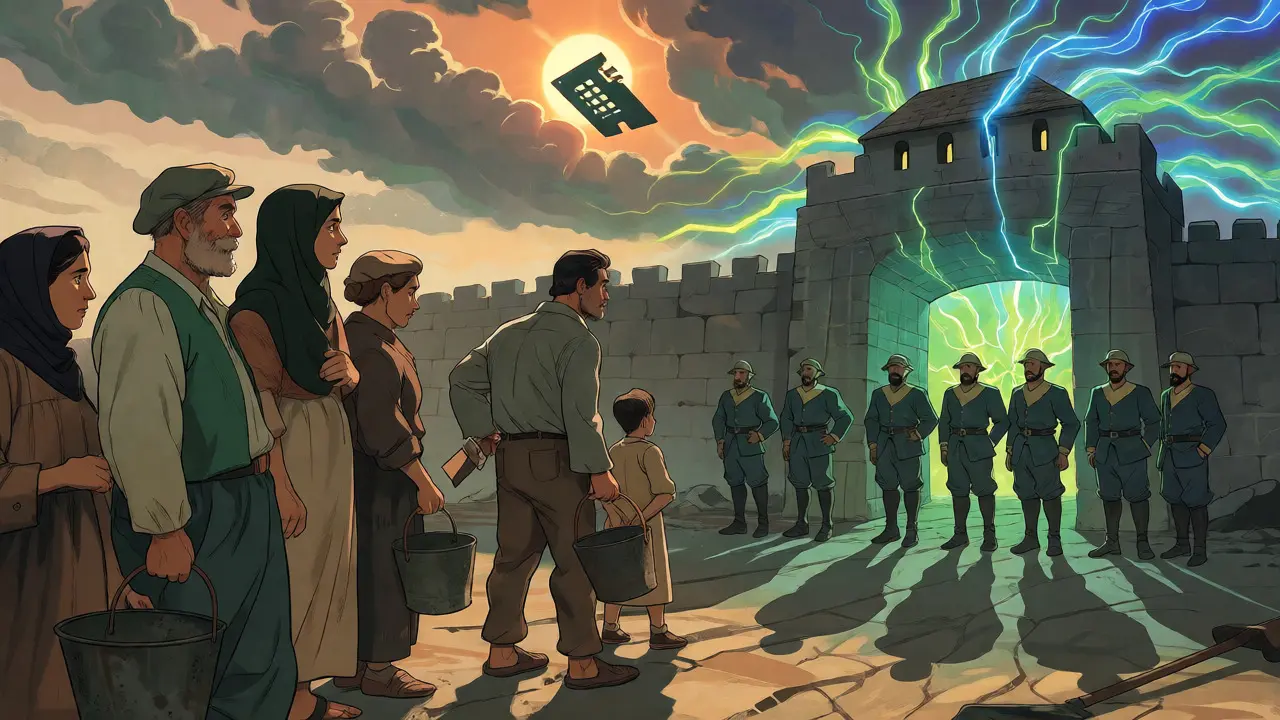
It is easy to get lost in the abstraction of hash rates and megawatts. But the real impact is felt in daily life. Consider a family in Isfahan trying to run a small textile workshop. If the power cuts out three times a day because a nearby mining farm is drawing maximum capacity, their looms stop. Their income drops. They cannot compete with imports. Meanwhile, the mining farm continues to generate revenue in dollars or euros, which flows into accounts controlled by entities far removed from the local community.
This disparity fuels social unrest. Protests in recent years have frequently cited economic mismanagement and corruption. Cryptocurrency mining has become a symbol of that corruption. When people see armored trucks guarding facilities that consume the grid's spare capacity, they view it as theft of their shared resource. The IRGC's involvement complicates any potential crackdown. You cannot simply send tax auditors to inspect a facility guarded by combat troops. The chain of command leads directly to the highest levels of power, where decisions are made based on geopolitical strategy, not consumer satisfaction.
Future Outlook: Monopoly or Market?
Will this system change? Probably not soon. The IRGC has too much invested, both financially and politically. As long as international sanctions remain in place, the incentive to use crypto for sanctions evasion stays strong. The regime has demonstrated its ability to adapt regulations to favor its allies. Even if they license more private miners, the structural advantage of state-backed entities-access to capital, land, and cheap power-will likely persist.
For now, the trend points toward continued expansion. New partnerships with Chinese and Russian tech firms suggest that Iran aims to become a major global hub for low-cost mining. The challenge for the rest of the world is distinguishing between legitimate decentralized mining and state-sponsored extraction. For Iranians, the question remains whether the promise of digital freedom will ever outweigh the reality of physical darkness.
Is cryptocurrency mining legal in Iran?
Yes, cryptocurrency mining is officially legal in Iran and was recognized as a licensed industry in 2019. However, the licensing process is strict, requiring miners to sell their earnings to the Central Bank of Iran. A significant portion of mining activity occurs in a legal gray area, particularly among state-affiliated entities that may not fully comply with tariff and reporting requirements.
Why does the IRGC mine cryptocurrency?
The IRGC mines cryptocurrency primarily to evade international sanctions. By converting domestically subsidized electricity into Bitcoin and other digital assets, they can generate foreign currency reserves that are harder to track and freeze than traditional bank deposits. This revenue helps fund military operations and proxy groups in the region.
How does crypto mining affect Iran's power grid?
Industrial-scale crypto mining consumes massive amounts of electricity, contributing significantly to power shortages and rolling blackouts in Iran. State-backed miners often receive priority access to the grid or pay lower rates, leaving residential and industrial customers vulnerable to load-shedding, especially during extreme weather conditions.
Can ordinary Iranians mine Bitcoin?
Ordinary Iranians can mine Bitcoin, but it is economically challenging. Private miners face higher electricity tariffs compared to state-affiliated entities and must adhere to strict regulations regarding the sale of their mined assets. Additionally, frequent power outages make consistent mining difficult for home-based setups.
What role do Chinese companies play in Iranian mining?
Chinese companies provide critical hardware, such as ASIC miners, and technical expertise to Iranian mining operations. Due to sanctions, many Western manufacturers avoid direct dealings with Iran. Chinese firms fill this gap, forming joint ventures with IRGC-linked entities to capitalize on Iran's low energy costs while maintaining plausible deniability regarding direct state involvement.