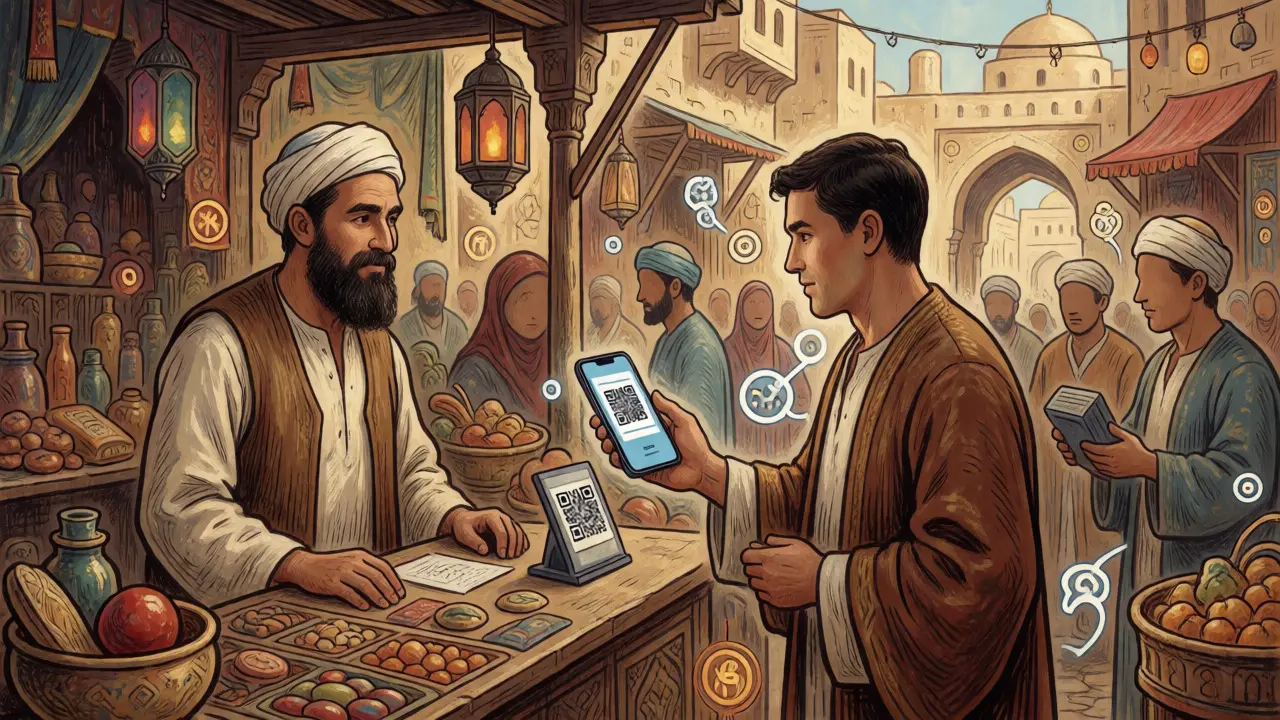
Imagine you run a boutique hotel in Dubai or an e-commerce store selling electronics to customers in Cairo. You want to accept USDT because your clients love it-it’s fast, cheap, and pegged to the dollar. But when you try to take that payment directly into your corporate bank account, things get messy. In some parts of the Middle East and North Africa (MENA), taking USDT for a cup of coffee is technically illegal; in others, it’s heavily regulated but allowed if you jump through specific hoops.
The reality of USDT acceptance in MENA isn't just about blockchain technology; it's a legal and operational puzzle. With over $175 billion in stablecoin volume flowing through the region recently, ignoring this trend means leaving money on the table. But diving in without a plan can lead to frozen bank accounts or regulatory fines. This guide breaks down exactly how to set up USDT payments across key MENA jurisdictions, focusing on the practical steps that keep you compliant and cash-flow positive.
Why USDT Dominates MENA Crypto Flows
Before we talk about setup, let’s look at why everyone wants to use USDT here. It’s not just hype. According to Chainalysis data from mid-2024, stablecoins accounted for roughly 52% of all crypto transactions in the MENA region-the highest share globally. Why? Because local currencies in places like Lebanon, Egypt, and Turkey have faced significant volatility. For many residents, holding USDT is essentially holding digital dollars, a safe harbor against inflation.
Tether, the issuer of USDT, has capitalized on this. By late 2024, there were over 109 million wallets holding USDT globally, with massive growth in emerging markets. The network effects are undeniable. When a customer in Riyadh or Beirut opens their wallet, they likely already have USDT ready to spend. They don’t need to buy Bitcoin first or convert from a volatile altcoin. They just send the dollar equivalent.
| Metric | Value / Status | Implication for Merchants |
|---|---|---|
| Regional Stablecoin Volume | ~$175 Billion (July 2023-June 2024) | Huge existing demand; high liquidity. |
| Stablecoin Share of Transactions | 52% (Highest Global Region) | USDT is the default choice for cross-border payments. |
| Primary Networks Used | Tron (TRC-20), Ethereum (ERC-20) | Focus integration on low-cost chains like Tron for retail. |
| User Growth Trend | ~9% Quarterly Growth | Adoption is accelerating, especially among expats. |
Navigating the Regulatory Patchwork
This is where most merchants get tripped up. "MENA" isn't a single country with one rulebook. Each nation treats USDT differently. If you treat them all the same, you will fail.
In the United Arab Emirates (UAE), the rules depend entirely on where your business is registered. If you are on the mainland (under the Central Bank of the UAE), accepting non-dirham stablecoins like USDT for general goods and services was largely restricted after July 2025. The Central Bank favors locally issued Dirham Payment Tokens (DPTs) for domestic retail. However, if you operate in a financial free zone like the Abu Dhabi Global Market (ADGM) or the Dubai International Financial Centre (DIFC), the story changes. ADGM explicitly approved USDT as an "Accepted Fiat-Referenced Token" in late 2024, allowing licensed entities to trade and settle in USDT freely.
Bahrain took a different route. In July 2025, the Central Bank of Bahrain introduced a clear framework for stablecoins. They allow fiat-backed stablecoins like USDT but require strict licensing, including minimum capital reserves and regular audits. This makes Bahrain attractive for fintechs wanting to build serious infrastructure, but less ideal for small shops wanting quick adoption.
Egypt remains stricter. Under Law 194/2020, trading or issuing crypto assets requires prior approval from the Central Bank of Egypt, which has been slow to grant licenses. As of late 2026, direct merchant acceptance of USDT in Egypt carries significant legal risk unless handled through very specific authorized channels.
The Technical Setup: Choosing Your Network
Once you know the legal landscape, you need to decide how to actually receive the money. USDT exists on multiple blockchains, but not all are equal for merchant operations in MENA.
- Tron (TRC-20): This is the workhorse for retail payments in the region. Transaction fees are often under $1, and settlement takes seconds. Most everyday users in MENA hold USDT on Tron because it’s cheap to move. If you want mass-market adoption, support TRC-20.
- Ethereum (ERC-20): Better for large B2B settlements where gas fees matter less than security perception. However, high fees make it impractical for buying a sandwich or paying a freelance invoice of $50.
- Binance Smart Chain (BEP-20): A middle ground with lower fees than Ethereum but slightly less widespread user familiarity compared to Tron in the Gulf.
For a practical setup, prioritize TRC-20. It aligns with the behavior of the majority of retail users in Dubai, Riyadh, and Cairo who are using mobile wallets to pay for services.

Implementation Models: Custodial vs. Non-Custodial
You have two main ways to accept USDT, each with distinct risks and rewards.
1. The Gateway Model (Custodial/Compliant)
This is the safest bet for regulated environments like mainland UAE. You integrate a payment provider like PaySelect, Pallapay, or a VARA-licensed gateway. The customer scans a QR code and sends USDT. The gateway holds the funds briefly, performs Anti-Money Laundering (AML) checks, converts the USDT to AED or USD, and deposits fiat into your bank account.
Pros: You avoid holding crypto on your balance sheet. Banks are more comfortable seeing fiat inflows. Compliance is handled by the provider. Cons: Higher fees (often 1-2%). Settlement delays (T+1 or T+2). You lose the immediate finality of blockchain payments.
2. The Direct Wallet Model (Non-Custodial)
Here, you generate a unique address for each invoice and wait for the transfer. Tools like TxNod allow you to connect your own hardware wallet (like a Ledger) to derive addresses automatically. Funds go straight to your wallet. No middleman holds the money.
Pros: Instant settlement. Lower costs (no processing percentage). Full control over funds. No chargebacks. Cons: You must manage the conversion to fiat yourself if you need local currency for payroll. In strict jurisdictions like mainland UAE, receiving foreign stablecoins directly for retail sales might raise red flags with your bank if not properly documented.
For solo founders and indie hackers operating in permissive zones (like ADGM or certain Saudi free zones), the non-custodial model offers superior economics. You keep more margin and gain faster access to capital.
Step-by-Step Implementation Checklist
Ready to turn on USDT payments? Follow this sequence to minimize friction.
- Audit Your Jurisdiction: Confirm if you are Mainland, Free Zone, or Offshore. Check if your current banking partner allows crypto-related inflows, even if converted immediately.
- Select Your Provider: Choose between a custodial gateway (for compliance ease) or a non-custodial tool (for cost/control). Ensure they support TRC-20 USDT.
- Integrate the Checkout: Add a crypto option to your POS or website. Display the price in both AED/SAR and the USDT equivalent. Use dynamic pricing tools to update the exchange rate every few minutes.
- Set Up Reconciliation: Map incoming transactions to invoices automatically. If using a non-custodial solution, ensure your accounting software can ingest blockchain transaction hashes for audit trails.
- Create a Conversion Policy: Decide when you convert USDT to fiat. Do you auto-sweep daily? Hold until month-end? Define this clearly to manage FX exposure.
- Communicate with Customers: Add signage or checkout notes explaining that payments are final and irreversible once confirmed on-chain.

Risk Management and Banking Relationships
The biggest threat to USDT acceptance isn't technical failure; it's banking friction. Many traditional banks in the GCC are cautious about crypto. If you receive USDT directly into a personal or corporate wallet and then transfer it to a bank, be prepared for questions.
To mitigate this, maintain impeccable records. Show the source of funds (the invoice) and the destination (your bank). Using a licensed intermediary or a gateway that provides a clean fiat receipt often smooths out these interactions. If you use a non-custodial approach, consider opening accounts with banks known to be crypto-friendly in the region, such as those serving free-zone entities.
Also, watch out for "chain confusion." Ensure your checkout system only displays the correct network address. Sending ERC-20 USDT to a TRC-20 address results in lost funds. Good gateways handle this abstraction; DIY setups require clear UI warnings.
The Future: Local Stablecoins vs. USDT
Don't expect USDT to remain the only game in town forever. We are seeing the rise of local stablecoins like AE Coin (dirham-backed) and DDSC. These tokens aim to solve the regulatory hurdle by being pegged to local currencies and fully compliant with Central Bank rules.
However, USDT has a massive head start in liquidity and user familiarity. For cross-border remittances-say, a worker in Dubai sending money home to India or Pakistan-USDT remains king because the recipient also prefers dollars. For domestic retail, local stablecoins may eventually dominate due to regulatory preference. The smart play for now? Support both. Let the market choose.
Is it legal to accept USDT in Dubai?
It depends on your license. In mainland Dubai, accepting non-dirham stablecoins for general retail is restricted under CBUAE regulations. However, in financial free zones like DIFC or ADGM, licensed entities can legally accept and trade USDT. Many merchants use VARA-licensed gateways to stay compliant while offering USDT options.
Which blockchain should I use for USDT payments in MENA?
Tron (TRC-20) is the most popular choice for retail due to its low fees and fast settlement times, which aligns with the habits of most MENA crypto users. Ethereum (ERC-20) is better suited for large B2B transactions where higher fees are negligible.
Do I need a crypto license to accept USDT?
Not necessarily. If you use a licensed third-party payment gateway that converts USDT to fiat before it hits your account, you typically do not need a separate crypto license. However, if you hold USDT directly in a corporate wallet, you may need to register your activity depending on the specific jurisdiction (e.g., VARA registration in Dubai).
How does USDT help with currency devaluation in Egypt or Lebanon?
In countries with high inflation, citizens seek dollar-denominated assets. USDT acts as a digital dollar. Merchants accepting USDT can preserve value against local currency depreciation, effectively hedging their revenue streams against FX losses.
Can I accept USDT without a registered company?
Yes, particularly in free zones or via certain non-custodial providers that cater to freelancers and indie operators. Some platforms allow private individuals to generate payment links and receive funds directly to their wallets without requiring a formal corporate entity, though tax obligations still apply.