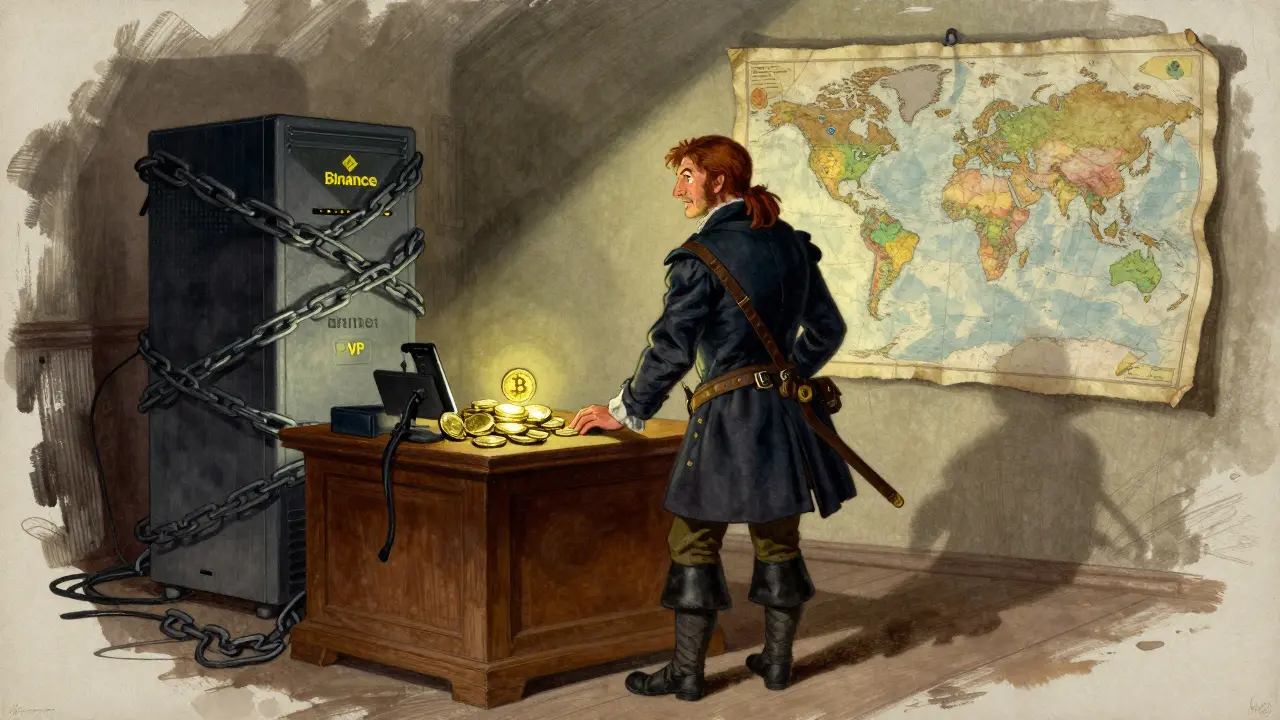
If you're using a VPN to access a crypto exchange and suddenly get locked out, you're not alone. VPN detection on major exchanges like Binance and Coinbase isn't some rare glitch-it's a standard feature. Reports from traders and security firms consistently show that 70-80% of VPN connections get flagged. That means for every 10 people trying to mask their location, 7 to 8 are caught. It’s not magic. It’s math. And if you’re still using a free VPN or a budget service, you’re almost guaranteed to be on that list.
How Exchanges Catch You Using a VPN
Crypto exchanges don’t just guess when someone’s using a VPN. They use a mix of tools that track every digital footprint you leave behind. The first thing they check is your IP address. Many VPN providers use the same IP addresses for thousands of users. These IPs are often hosted on cloud servers like AWS or DigitalOcean-places that regular people don’t normally connect from. Exchanges maintain massive blacklists of these IPs. If your connection comes from one, it’s flagged before you even log in. But it doesn’t stop there. Behavioral tracking is even more powerful. If you log in from New York at 8 a.m., then suddenly from Tokyo at 8:05 a.m., that’s not just suspicious-it’s impossible. Exchanges track login times, device fingerprints, browser settings, and even how fast you type your password. They use machine learning to spot patterns that don’t match real human behavior. A user who switches locations five times in an hour? That’s a bot or a VPN user. Either way, the system reacts. Some exchanges go further. They check for DNS leaks-when your real IP accidentally slips out while you think you’re hidden. Others scan for WebRTC leaks, which expose your true location through your browser, even if your VPN is working. Mobile users aren’t safe either. GPS spoofing apps can be detected by app-level checks on Android and iOS. It’s a multi-layered trap.Why Exchanges Care So Much
You might think, “I’m just trying to access my portfolio. Why does it matter where I am?” But exchanges aren’t just being picky. They’re under heavy legal pressure. In the U.S., EU, Japan, and other regulated markets, exchanges must follow strict KYC (Know Your Customer) and AML (Anti-Money Laundering) rules. If a user from a banned country like Iran or North Korea accesses a U.S.-licensed exchange through a VPN, the exchange can face fines in the millions. That’s why they don’t just block VPNs-they build systems to catch them. Some platforms, like Coinbase, have started using tiered access. Instead of outright blocking you, they might limit withdrawals, freeze trading for 24 hours, or force you to complete extra ID verification. It’s not punishment-it’s compliance. They’re trying to prove they’re doing everything they can to stop illegal activity.Free VPNs? They’re the Worst Choice
If you’re using a free VPN like ProtonVPN Free, Windscribe Free, or any random browser extension labeled “unlimited VPN,” you’re already flagged. These services don’t have the resources to rotate IPs or hide their infrastructure. Their server lists are public. Their IP ranges are shared. And exchanges know every single one. Free services also sell your data. Some log your browsing history. Others inject ads or track your activity to sell to third parties. That’s not privacy-that’s exposure. And when your crypto wallet is linked to an account that’s been tracked by a shady VPN provider? You’re one data breach away from losing everything.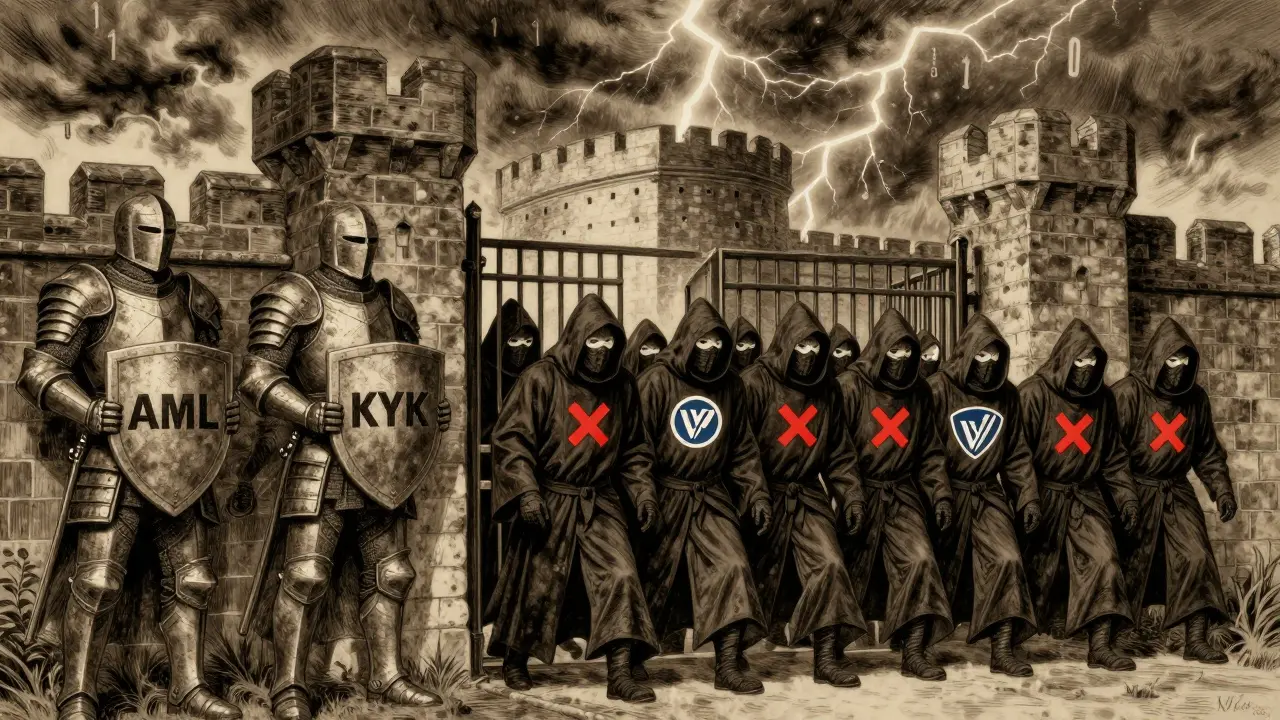
What Actually Works: Premium VPNs Built for Crypto
Not all VPNs are created equal. The ones that still work for crypto trading aren’t the cheapest-they’re the most specialized. NordVPN is the top pick for traders in 2026. Why? It uses dedicated IPs-unique addresses assigned just to you, not shared with hundreds of others. It accepts payments in Bitcoin, Ethereum, and other cryptos. Its servers run on RAM-only hardware in Panama, meaning no logs can be stored, even if someone physically seizes a server. It has 118 country options and blocks malicious sites that try to steal your seed phrases. ExpressVPN is a close second. Based in the British Virgin Islands, it has over 3,000 servers in 94 countries. It also accepts Bitcoin payments and uses TrustedServer technology-reboots every time the server powers off, wiping all data. It’s not cheap (around $12/month), but it’s the most reliable option for avoiding detection. These services cost more because they’re built to outsmart detection. They use residential IPs (IPs tied to real home internet connections), avoid data center ranges, and rotate connections slowly to mimic human behavior. They don’t guarantee 100% access, but they cut your detection risk from 80% down to under 20%.What Happens When You Get Caught
Getting flagged isn’t always instant. Sometimes, you’ll notice small changes:- Your withdrawal limit drops from $50,000 to $500
- You’re asked to re-upload your ID with a live selfie
- You can’t log in from your phone unless you’re on Wi-Fi
- Your account gets locked for 48 hours during a market spike
Security vs. Access: The Trade-Off
Here’s the truth: using a VPN for crypto isn’t just about bypassing geo-blocks. It’s about protection. Public Wi-Fi at a coffee shop? A hacker can steal your exchange login in seconds. A good VPN encrypts your traffic so no one can see what you’re doing. Malware on your device? NordVPN’s dark web monitoring alerts you if your wallet seed phrase is leaked. Phishing emails? Its built-in threat protection blocks fake exchange sites. So while detection is real, the risk of going without a VPN is higher. The smart trader doesn’t try to beat the system-they choose a service that balances access with safety.
Advanced Tricks (And Why You Should Avoid Them)
Some users try to outsmart detection with tools like residential proxies, GPS spoofing, or browser fingerprint randomizers. These work-sometimes. But they’re risky. Residential proxies cost $50-$200/month. They’re slow. And if the exchange finds out you’re using one, they may permanently ban your account. GPS spoofing on Android? It violates Google’s terms. Browser fingerprinting tools? Many exchanges now detect them as automated behavior. The bottom line: if you need to go this far, you’re probably already in legal gray territory. And exchanges don’t care how clever you are-they just want compliance.What You Should Do Right Now
If you’re using a VPN for crypto:- Switch from a free service to a premium one like NordVPN or ExpressVPN.
- Pay with crypto, not credit card-it adds another layer of privacy.
- Use the same server location consistently. Don’t switch between countries daily.
- Enable the kill switch and DNS leak protection.
- Turn on dark web monitoring if your VPN offers it.
Future Outlook: The Arms Race Continues
Exchanges are investing millions into AI-powered detection. In 2026, they’ll be able to predict if you’re using a VPN just by how you type your password or how long you pause before clicking “Confirm.” Meanwhile, VPN providers are building new obfuscation layers-traffic that looks like regular video streaming, encrypted DNS tunnels, and server networks disguised as legitimate businesses. The 70-80% detection rate isn’t static. It’s a moving target. But right now, the odds are still stacked against casual users. The only way to win is to play smart, not hard.Is it illegal to use a VPN with a crypto exchange?
No, using a VPN isn’t illegal in most countries. But it often violates the terms of service of crypto exchanges. If you’re caught, your account can be frozen or permanently banned. In countries where crypto is banned (like China or Nigeria), using a VPN to access exchanges could lead to legal consequences.
Can I use a VPN to access crypto exchanges in restricted countries?
Technically, yes-but it’s risky. Exchanges like Binance and Coinbase actively block traffic from countries where they don’t have licenses. Even with a premium VPN, you might still be blocked. Some users succeed, but many get locked out and lose access to funds. Always check if the exchange officially supports your country before relying on a VPN.
Why do some VPNs work while others don’t?
Premium VPNs like NordVPN and ExpressVPN use dedicated IPs, residential networks, and avoid data center IPs that exchanges blacklist. Free VPNs use shared IPs from cloud providers-exchanges know these instantly. Premium services also avoid behavioral red flags by not switching locations too fast and masking device fingerprints.
Do crypto exchanges track my real IP if I use a VPN?
If the VPN leaks data-through DNS, WebRTC, or a software bug-then yes. That’s why it’s critical to use a reputable VPN with leak protection. Top-tier services test for leaks constantly and automatically block traffic if a leak is detected. Never assume your VPN is hiding you unless you’ve tested it yourself.
Should I use a VPN on my phone for crypto trading?
Yes-if you’re on public Wi-Fi or cellular data. Mobile networks are just as vulnerable to hacking as public Wi-Fi. A trusted VPN on your phone encrypts your connection and protects your login details. Just make sure the app has a kill switch and doesn’t run in the background when you’re not trading.
bro i used windscribe free for months and got locked out mid-trade during a 300% pump. lost 12k. not worth it. just get nordvpn. i paid in btc and never looked back.
i’ve been using expressvpn for 2 years now. never once got flagged. i pay with eth, use the same server in singapore, and never switch. also turned on the kill switch and dns leak protection. simple. no drama. if you’re still on free stuff, you’re asking for trouble.
i’m just here to say that if you’re on public wifi without a vpn you’re basically handing your seed phrase to the next guy with a wifi sniffer 😅. i don’t care if they detect me-i care that my portfolio ain’t getting drained. nordvpn’s dark web monitor saved me once when my email got leaked. life saver.
Oh wow. So we’re now at the point where using a VPN to access your own assets is considered a 'violation'? How quaint. I’m sure the compliance officers are sleeping soundly tonight, knowing they’ve protected us from the horror of… accessing our wallets from a different country. Truly heroic.
The technical breakdown here is accurate. Exchanges detect VPNs through IP clustering, behavioral biometrics, WebRTC leaks, and DNS inconsistencies. Premium services mitigate this by using residential IPs, RAM-only servers, and protocol obfuscation. Free services lack all three. This isn’t opinion-it’s infrastructure.
I use a free vpn and it works fine why are you all so dramatic
70-80% detection? More like 100% because every exchange is just a corporate puppet of the fed anyway. They don’t care if you’re in India or Iowa-they care if you’re not paying taxes. And you’re all just playing their game by even using a vpn.
lol i tried expressvpn for a week then got bored. now i just use my cousin’s ip. he lives in germany. works great. no stress. 🤷♀️
The real question isn’t whether the system catches you-it’s why we let it. We’re trading in decentralized assets, yet we’re begging centralized platforms for permission to access them. We built this for freedom, and now we’re afraid to use it because we’re scared of a 48-hour lock. We’ve forgotten the point.
You’re all acting like this is rocket science. If your vpn doesn’t accept crypto and doesn’t have dedicated ips, you’re not a trader-you’re a data point. Also, stop using your real name on exchanges. I’ve seen people get banned because they used their full legal name and their linked bank account. Duh.
I’m from the Philippines and I use nordvpn to access binance because my local exchange has 0 liquidity. It’s not about hiding-I’m just trying to trade. If you’re judging people for using a vpn, you’re missing the point. This isn’t about breaking rules. It’s about survival.
The premise is flawed. Exchanges don’t 'detect' VPNs-they detect non-compliance with jurisdictional mandates. The architecture is designed to enforce regulatory capture, not security. NordVPN isn’t 'better'-it’s just a more sophisticated evasion tool. You’re not outsmarting the system. You’re participating in its escalation.
Let’s be real: if you’re using a VPN to access crypto because you’re from a restricted country, you’re not a trader-you’re a regulatory arbitrageur. And if you’re paying in crypto to avoid KYC, you’re not being private-you’re being suspicious. These platforms aren’t evil. They’re just responding to the same regulatory pressure that shuts down banks. Don’t romanticize the workaround.
Just use nordvpn. Seriously. It’s worth every penny. I’ve been trading for 5 years. This is the only thing that never failed me. 💯
I find it fascinating how Western-centric this entire discourse is. In India, using a VPN is not a luxury-it’s a necessity. Many of us rely on them to access global markets because our local exchanges are either unregulated or crippled by bureaucratic delays. Yet here, you treat it like a technical glitch. It’s not. It’s economic exclusion dressed up as compliance.
You know what’s really happening? The exchanges are using this as a cover to collect behavioral data on traders. Every time you switch servers, every time you type your password, they’re training their AI to predict your next move. This isn’t about security. It’s about surveillance. And you’re all happily giving them your fingerprints in exchange for 'access'.
i just want to trade my btc without getting flagged. why does it have to be so complicated? i tried expressvpn, it worked for 3 days then my account got frozen. now i’m using a proxy from a friend. it’s slow but it works. i don’t care about privacy. i just want my money.
bro you’re using a friend’s proxy? that’s worse than a free vpn. if he gets caught, they trace it back to you. your account is toast. just buy nordvpn. $50 a year. less than your coffee habit.