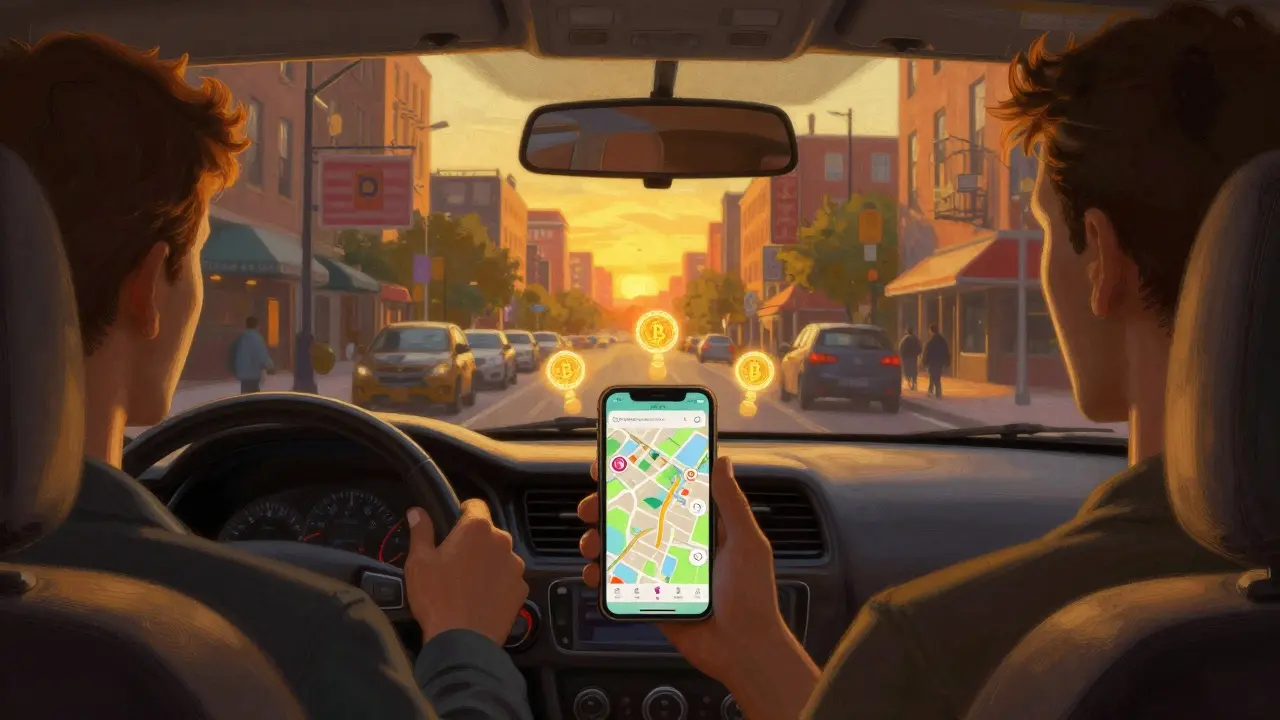
If you've ever wondered why you're giving away your location data for free, NAVI is designed to change that. It's not just a digital currency; it's the fuel for an app that uses your smartphone camera and AI to map the world in real-time. While it's still a smaller player in the massive crypto market, its approach to merging real-world utility with blockchain incentives makes it a fascinating case study in the "Move-to-Earn" trend.
How the NAVI Ecosystem Actually Works
At its core, Atlas Navi is a navigation app available for iPhone and Android. But unlike standard maps, it's built on a reward loop. When you drive with the app active, you earn points based on the miles you cover. These points are then convertible into NAVI tokens, which you can trade on exchanges or use within the app.
The magic happens under the hood with artificial intelligence. The app doesn't just track your GPS; it uses your phone's camera to detect potholes, road construction, accidents, and even where police cars are parked. This real-time data helps the AI optimize routes for everyone else using the platform. In exchange for providing this "eyes on the road" data, you get paid.
However, the reward system isn't a flat rate. It uses a declining incentive model to ensure the economy doesn't crash from over-inflation. For example, the first 50 million miles driven globally on the platform earned 0.10 NAVI per mile. As the community grows and more miles are logged, that rate drops-first to 0.05 NAVI, and so on. This keeps the token's value stable as the user base scales.
The Role of NFTs and Value Sinks
If you just drive and sell your tokens, you're treating NAVI like a simple faucet. To really maximize earnings, the project introduces Non-Fungible Tokens (NFTs). In the Atlas Navi world, you don't just have a profile; you have a virtual vehicle. You can purchase 3D NFT vehicle models using NAVI tokens, and these aren't just for show. Different vehicles come with different earning multipliers, meaning a rarer or higher-tier NFT lets you earn more tokens for every mile you drive.
To stop the market from being flooded with tokens, the project uses "value sinks." Think of these as mandatory costs that pull tokens out of circulation. Your NFT vehicle isn't immortal-it requires maintenance. You'll need to spend NAVI tokens on repairs, refueling, or recharging as you accumulate mileage. This creates a constant, natural demand for the token that doesn't rely on speculative trading.
| Feature | Requirement | Impact on Token |
|---|---|---|
| Daily Driving | App Active | Token Generation (Rewards) |
| Vehicle Upgrades | Buy NFT Vehicle | Token Burn/Spend (Demand) |
| Maintenance | Mile-based Repairs | Recurring Token Spend |
| Premium Features | Subscription | Fiat-to-NAVI Buyback |
| Governance | Token Holding | DAO Voting Power |
Analyzing the Tokenomics and Market Position
From a financial perspective, NAVI is a micro-cap project. As of early 2026, it had a market cap of around $1.04 million and a circulating supply of 160 million tokens, with a hard cap of 300 million. For those looking at the charts, the price has hovered around the $0.006 range, though it's prone to the typical volatility of new crypto projects.
One interesting strategy the team used is an aggressive vesting schedule. Instead of dumping all the tokens at once, they implemented a daily linear vesting period over 18 months. This prevents a "supply shock" and encourages a slow, steady entry of tokens into the market, which theoretically puts upward pressure on the price as demand from new users increases.
The project also has a clever way of handling fiat currency. If you decide to pay for premium features using US Dollars instead of NAVI tokens, the company doesn't just keep the cash. They use that USD to buy NAVI tokens from the open market. This means every new paying user-even those who hate crypto-actually helps push the token's price up by increasing buying pressure.

How NAVI Compares to Traditional Maps
You might be wondering why anyone would switch from Google Maps. The answer is simple: incentives. Google and Apple provide amazing services, but they don't pay you for the data you provide. Atlas Navi turns the user into a partner. By integrating Artificial Intelligence that analyzes smartphone camera feeds, NAVI provides a level of detail (like specific pothole locations or police presence) that traditional GPS often misses.
While other "Move-to-Earn" apps focus on walking or gym workouts, NAVI targets the massive mobility market. It's effectively gamifying the commute. By adding a collectible element through licensed 3D vehicles, it appeals to both the utility-driven driver and the crypto collector.
Technical Roadmap and Security
Right now, the project is in its final development stages, with the app already boasting over 400,000 downloads. The main focus is on the "last mile" of blockchain integration. This includes finalizing Smart Contracts and implementing Wallet Connect features, which will allow users to link their external wallets directly to the app to manage their tokens and NFTs more easily.
Security is a major hurdle for any new token. To avoid the pitfalls of hacks or exploits, the team contracted CertiK, a well-known blockchain security firm, to audit their smart contracts before the full mainnet deployment. This is a critical step for any project claiming to handle real-world financial rewards.

The Path Forward: From App to Mobility Ecosystem
Atlas Navi isn't planning to stop at just being a map. The long-term goal is to evolve into a full mobility ecosystem. This includes a DAO (Decentralized Autonomous Organization), where token holders can vote on new features, vehicle designs, and which automotive brands the project should partner with. Imagine a future where car manufacturers release official NFT versions of their new models on Atlas Navi to attract drivers.
They are also opening the door to the creator economy by allowing independent 3D designers to create custom vehicle models for the platform in exchange for NAVI tokens. This turns the project into a hub for both drivers and digital artists, expanding its reach beyond just people who want to earn a bit of extra cash while driving.
How do I earn NAVI tokens?
You earn NAVI by downloading the Atlas Navi app on Android or iOS and driving with the app active. Your miles are recorded as points, which you can then convert into NAVI tokens based on the current market price. The amount you earn per mile decreases as the total global mileage of the community increases.
Do I have to buy an NFT to use the app?
No, the basic navigation and earning features are free for everyone. However, if you want to earn tokens at a faster rate, you can purchase a vehicle NFT. These NFTs act as multipliers that increase the amount of NAVI you earn per mile driven.
Is the Atlas Navi app safe to use while driving?
The app is designed to run in the background, but like any navigation tool, it should be used with a dashboard mount. The AI analysis of the road is handled by the software, but drivers should always prioritize road safety and follow local laws regarding phone use in vehicles.
Where can I buy and sell NAVI tokens?
NAVI is listed on several cryptocurrency exchanges, including MEXC and is tracked on platforms like CoinMarketCap and CoinGecko. You can trade it there or hold it in a compatible blockchain wallet once the Wallet Connect features are fully integrated into the app.
What happens if my NFT vehicle needs repairs?
As you drive more miles, your virtual vehicle accumulates wear and tear. To keep your earning multipliers active, you must spend NAVI tokens on maintenance and repairs. This is part of the project's economic model to ensure tokens are spent and not just accumulated.
Next Steps for New Users
If you're new to the ecosystem, the best way to start is by downloading the app and logging a few trips to see how the point system works. If you're a crypto investor, keep an eye on the NAVI crypto price action and the progress of the CertiK audit, as the full rollout of smart contracts usually triggers a shift in token utility.
For those who already hold tokens, exploring the DAO governance options is the best way to influence the project's direction. Whether you're interested in the AI tech or the passive income aspect, the key is to balance your earnings with the costs of vehicle maintenance to stay profitable.
this sounds like a wild way to make some pocket change while running errands!! love the idea of getting a slice of the pie for all that data we usually just give away for free
another micro-cap "innovation" that's actually just a glorified data harvesting scheme. the tokenomics look flimsy as hell and the "value sinks" are just a fancy way to make you pay back what you earned
This is such a cool concept! 🚗💨 Mapping the world together sounds like a great community effort. Can't wait to see those 3D cars! 🌟
You people are truly naive. You're literally paying for the privilege of having a camera record every street corner for some opaque "AI." It is a surveillance apparatus disguised as a game. The 18-month vesting is just a tactic to keep the sheep from dumping before the architects vanish with the liquidity.
Pretty neat idea. Makes the commute feel less like a chore.
classic honey pot they want your locations and your habits for some global database and you think a few cents in a fake coin makes it okay you guys are blind
It is important to note that the implementation of a Decentralized Autonomous Organization may provide significant transparency regarding the allocation of funds and the future trajectory of the platform.
Oh wow, another "revolutionary" token. I'm sure the synergistic alignment of the AI-driven data ingestion and the deflationary token burn will definitely avoid the catastrophic hyper-inflationary spiral we've seen in every other Move-to-Earn project since 2021. Truly a groundbreaking use of a smart contract to essentially create a digital chore list for drivers who enjoy the thrill of spending their earnings on virtual car repairs
Hold on! If you guys are just starting out, really focus on the free tier first. Don't rush into the NFTs until you've felt the rhythm of the app. It is an absolute game changer for anyone who spends hours in traffic!
I find myself pondering the strange intersection of capitalism and geography here, where the act of moving through a physical space is transformed into a quantifiable digital asset, effectively commodifying our very existence in the urban sprawl. It is almost poetic that we must pay for the "maintenance" of a digital car to earn more of a currency that only exists because we are driving real cars, creating a recursive loop of labor and simulation that reflects our own detachment from the physical world.
i just want the cool cars lol
If you actually believe a $1 million market cap project is a "fascinating case study," you're delusional. This is a textbook pump-and-dump waiting to happen and anyone investing in this is just asking to be exit liquidity.
I am so deeply moved by the possibilty of a more fair world where drivers are finally recongnized!! It is simply beuatiful to see technollogy used for such high purposes!
The sheer audacity of calling this a "mobility ecosystem" is laughable. 🙄 It's a basic app with a token attached to it, yet it's dressed up in the linguistic finery of a Silicon Valley pitch deck. Absolutely quaint. 💅
It's wonderful to see how these global trends in blockchain are reaching different markets. This could be a very helpful tool for drivers in crowded cities like Mumbai or Delhi to earn extra income.
I can definitely see how this would be a fun way to get a few extra tokens while driving to the store. Maybe we can all share tips on the best routes to maximize points!
the app is fine i guess but the whole nft thing is just overkill for a map app
I'm curious if the AI can distinguish between different types of road damage or if it's just basic detection. It would be so helpful if this data actually got fed back to city councils for faster repairs!
I really hope this project takes off. We need more ways to make our daily routines feel rewarding and productive.
glad someone is looking for ways to help drivers