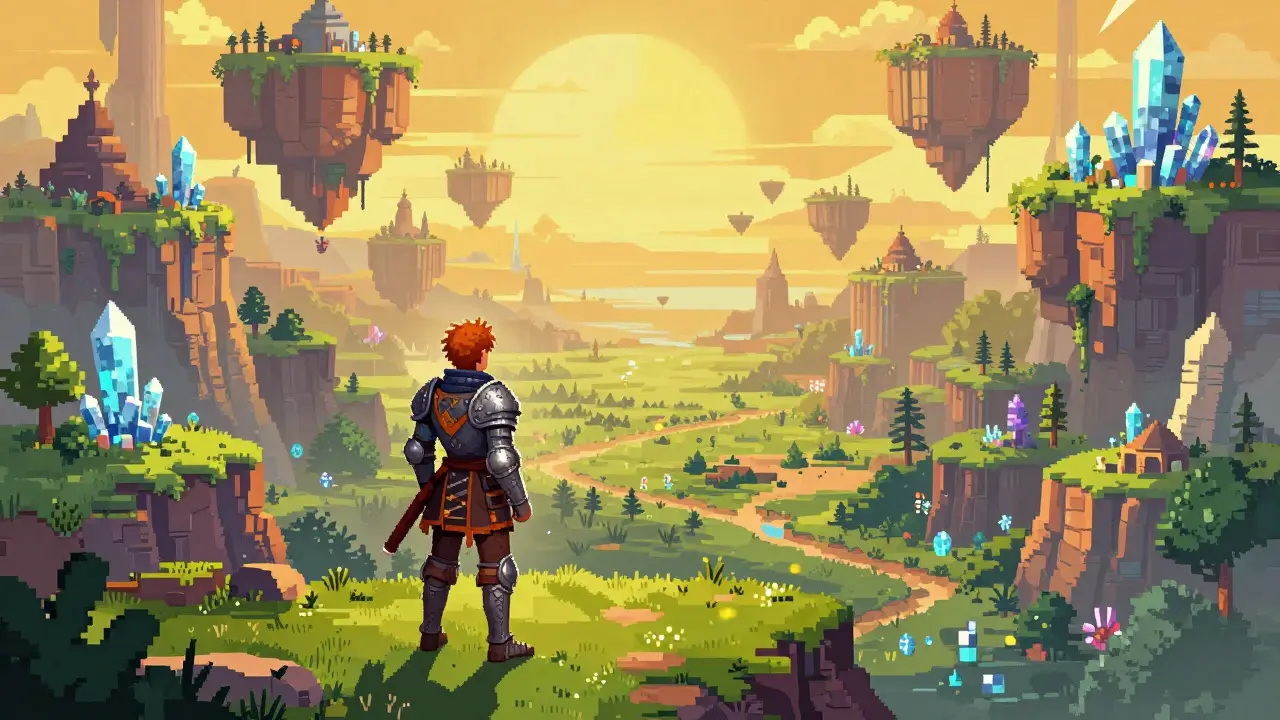
Imagine a world where your favorite retro RPG isn't just a way to kill time, but a functioning financial engine that puts money in your pocket. That is the core idea behind DeFi Kingdoms is a cross-chain fantasy RPG that merges decentralized finance (DeFi) with play-to-earn gaming mechanics. Unlike traditional games where your achievements are locked in a digital vault, this ecosystem lets you own your assets as NFTs and earn real cryptocurrency while exploring a pixel-art wilderness.
Quick Takeaways: The JEWEL Ecosystem
- The Core Asset: JEWEL is the primary utility and governance token used for voting and in-game functions.
- Multi-Chain Setup: The game spans across several networks, including Avalanche, Kaia, and Metis.
- Earning Potential: Players earn through questing, yield farming in "gardens," and trading NFTs.
- Risk Factor: High price volatility and a steep learning curve for those new to blockchain.
What Exactly is the JEWEL Token?
At its heart, JEWEL is an ERC-20 standard token that acts as the lifeblood of the DeFi Kingdoms universe. If you think of the game as a country, JEWEL is both the currency and the voting ballot. Holding this token allows you to participate in the governance of the KingdomsDAO, the anonymous team and community that steer the project's direction.
But it's not just for voting. JEWEL is used to unlock high-tier gameplay features and is the primary asset players seek to accumulate. While the token has seen massive price swings-dropping significantly from its all-time high of $23.36-it remains the central piece of the economic puzzle. The project also utilizes secondary tokens like CRYSTAL for specific functions and the newer JADE token to handle specialized game mechanics, creating a layered economy that mimics a real-world financial system.
How the Game Actually Works
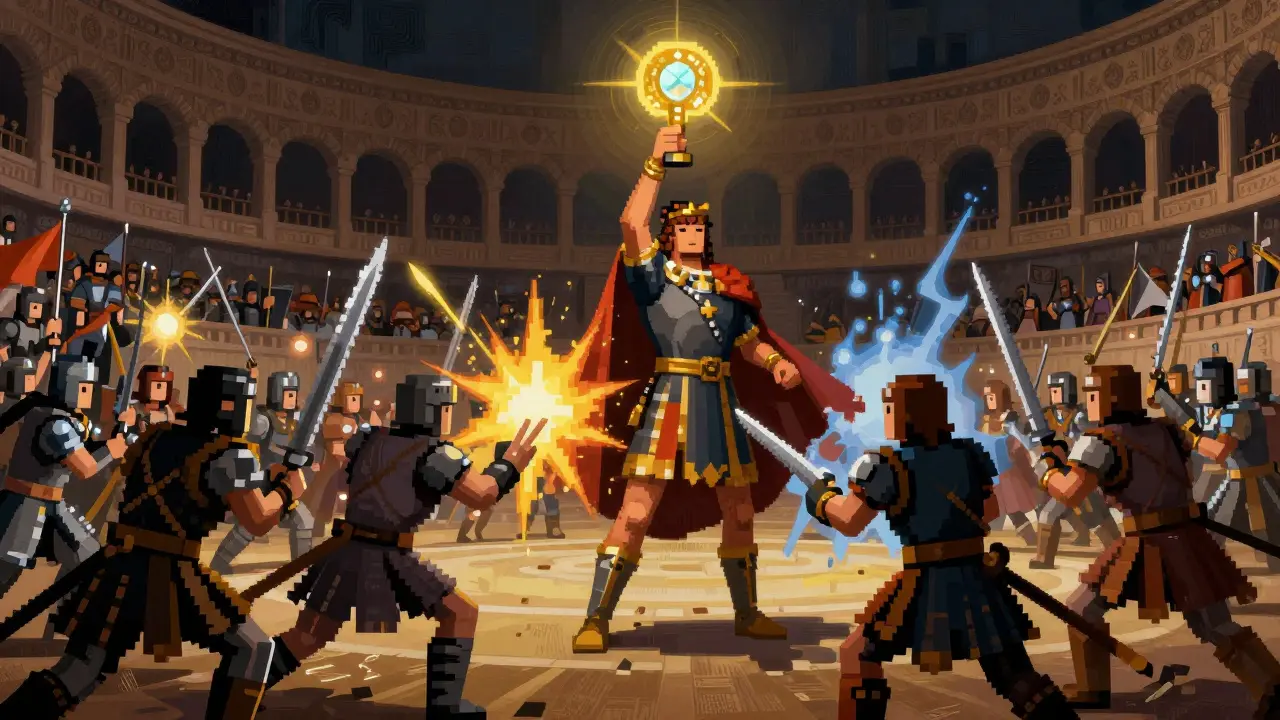
DeFi Kingdoms isn't just one game; it's a series of interconnected "realms" spread across different blockchains to keep things fast and cheap. For example, the realm of Crystalvale lives on the DFK Chain (an Avalanche Layer 1), while Serendale is hosted on the Kaia blockchain. When you want to engage in competitive player-versus-player (PvP) combat, you head to the DFK Colosseum, which is built on Metis.
As a player, you don't just fight monsters. You interact with a decentralized exchange (DEX) built right into the game world. You can provide liquidity to pools, essentially acting as a bank for other players, and earn annual percentage yields (APYs) that typically range from 5% to 30%. This is where the "DeFi" part of the name comes in-you're doing actual financial engineering, but it's wrapped in a nostalgic 16-bit aesthetic.
| Token | Primary Role | Key Attribute |
|---|---|---|
| JEWEL | Governance & Utility | Limited Max Supply (~121M) |
| CRYSTAL | In-game utility | Used for specific game functions |
| JADE | Specialized mechanics | Introduced for newer gameplay loops |
Ways to Earn: From Questing to Staking
The "play-to-earn" (P2E) model is what draws most people in. There are three main ways to make money here. First, there are the quests. By completing tasks in the game world, players can earn consistent daily rewards. Some users report making $10 to $20 a day just by staying active. Second, there's the NFT market. Your characters and items are unique digital assets that you can sell to other players if they become rare or powerful.
Then there's the "gardens" staking system. This is a favorite for more passive investors. By staking your JEWEL tokens in these virtual gardens, you can earn a steady APY, often between 15% and 25%. It's a way to grow your holdings without having to spend hours grinding for XP. For the pros, optimizing garden staking and renting out high-level heroes can generate hundreds of dollars a month, though this requires a significant initial investment.

The Technical Hurdle: Is it for Everyone?
Here is the honest truth: DeFi Kingdoms is not as simple as downloading an app from the App Store. Because it's a cross-chain project, you have to deal with "bridging." Bridging is the process of moving your assets from one blockchain (like Ethereum) to another (like Avalanche or Metis). If you've never used a Web3 wallet like MetaMask, this can feel like learning a new language.
Many newcomers struggle with network configurations or miscalculating "gas fees"-the cost of processing a transaction on the blockchain. In fact, a large chunk of community support tickets are just people who sent funds to the wrong chain. To get started comfortably, you typically need a basic understanding of how decentralized exchanges work and a bit of starting capital (around $50-$100) to cover these transaction costs.
Comparing DeFi Kingdoms to Other Crypto Games
If you've looked at other blockchain games, you'll notice DeFi Kingdoms takes a different path. Pure P2E games like Axie Infinity focus heavily on the loop of breed-battle-earn. Pure DeFi platforms like Uniswap are just interfaces for trading. DeFi Kingdoms tries to be both. It gives you the entertainment of an RPG while providing the actual financial tools of a DeFi protocol.
In terms of market size, it's a smaller fish. JEWEL's market cap is a fraction of giants like The Sandbox (SAND) or Axie Infinity (AXS). However, its strength lies in its functional utility. People aren't just speculating on the price; they are actually using the tokens to play a game and earn yield. This creates a more organic demand than projects that rely solely on hype.
Risks and Red Flags
No crypto investment is without risk, and JEWEL has its share. The most glaring issue is the price volatility. The token has crashed significantly from its peak, which makes some analysts worry about the long-term sustainability of its tokenomics. If the reward for playing drops too low, players leave, and the economy collapses.
There's also the risk of smart contract failures. While the KingdomsDAO frequently updates its code, every update requires users to reconfigure their settings. Furthermore, because it's a decentralized world, scams are common in the NFT marketplace. If you're trading high-value assets, you have to be incredibly careful about who you're dealing with.
What's Next for the Kingdom?
The developers are actively trying to lower the barrier to entry. They've migrated parts of the game to the Kaia blockchain to speed up transactions and reduce fees. There are also plans for a mobile app, which would be a game-changer for attracting casual gamers who don't want to mess with complex browser extensions.
Looking further ahead, the roadmap mentions virtual reality (VR) integration by 2025 and partnerships with traditional gaming studios. If they can successfully bridge the gap between "crypto natives" and "regular gamers," they could move from a niche project to a mainstream gaming platform. The success of the recently launched "Realm Wars"-where players battle for territory and JEWEL rewards-shows that the team is still innovating on how to keep the community engaged.
How do I start playing DeFi Kingdoms?
First, install a Web3 wallet like MetaMask. You'll need to acquire some JEWEL tokens from an exchange (like Gate.io) and some native tokens for the chains the game uses (like AVAX for Avalanche) to pay for transaction fees. Once your wallet is funded, connect it to the official DeFi Kingdoms website and follow the onboarding quests to get your first characters.
Is JEWEL a safe investment?
Like all cryptocurrencies, JEWEL is highly volatile. It has a strong utility within its own game, but its price can swing wildly based on market trends and player adoption. It is generally considered a high-risk, high-reward asset. Never invest more than you can afford to lose.
What is the difference between JEWEL and other in-game tokens?
JEWEL is the primary governance and utility token; it's what you use to vote on project changes and gain access to top-tier features. Other tokens like CRYSTAL and JADE are designed for specific gameplay mechanics and are often used as internal currencies for crafting or quest rewards rather than for overall project governance.
Can I earn money without spending any?
While it's possible to start with very little, most players find they need some initial capital to cover gas fees and buy basic NFTs to make questing efficient. Some free-to-play elements exist, but the most lucrative paths (like garden staking and high-level PvP) require an investment in JEWEL and NFTs.
What happens if I send tokens to the wrong blockchain?
This is a common mistake for beginners. Because DeFi Kingdoms is multi-chain, sending an Avalanche-based token to a Metis address can result in the loss of those funds. Always double-check which network your wallet is set to before confirming any transaction.
If you're new to this, definitely use a hardware wallet for your JEWEL holdings. Metamask is fine for interacting with the game, but keeping your main stash offline is the only way to sleep soundly at night.
look at the chart and tell me you actually see a recovery here because the tokenomics are fundamentally broken when the reward loop depends on new capital inflow to sustain the apy and the actual gameplay is just a skin for a liquidity pool which we have seen a thousand times in the 2021 era of trash coins that promised the world and delivered a 99 percent drawdown for the retail bagholders who believed in the dream
totally agree with the bridge part it can be super scary at first 🚀 just take it slow and you'll be fine
The notion that a 16-bit aesthetic somehow adds value to a decentralized exchange is simply quaint. It's a thin veil for speculative gambling, meticulously dressed up as an "RPG experience" for those who find actual finance too boring.
I have tried this game and it is amazinggg!! 🌟 just make sure u check the gas fees on Metis before you move your tokens or you will lose money lol 😂
The mention of the DFK Chain being an Avalanche Layer 1 is slightly misleading. It's a subnet, which provides specific scaling advantages that the author fails to elaborate on, though the distinction is crucial for understanding the actual throughput of the game's economy.
Follow the money people. This multi-chain bridging is just a way for the elites to fragment liquidity and trap your assets in silos while the DAO masks the real controllers of the treasury. It's all a social experiment by the globalists to see how fast we'll trade privacy for a pixelated sword. Absolute madness.
I've been playin for a few months now and the garden staking is legit. Just be careful with the bridge, I almost sent my funds to the wrong chain last week lol. its a bit of a larning curve but worth it
Typical P2E nonsense. Themoral bankruptcy of turning leisure into a grinding job for pennies is astounding. This is just digital serfdom wrapped in a fantasy skin, and the lack of a sustainable burn mechanism makes the whole setup a joke.
Oh look, another "revolutionary" gaming project 🙄 I'm sure the VR integration in 2025 will be totally real and not just a vaporware promise to keep the JEWEL price from hitting zero. 🤡
It's actually heartbreaking to see people lose their hard-earned money because of a "wrong chain" error. We need better safety protocols in Web3 before more innocent people get wiped out by a simple typo!
These westerners try to explain DeFi like they discovered it. My country is far more advanced in digital adoption. This game is just a toy for people who think they are philosophers of finance but cannot even spell the basics of tokenomics correctly.
Listen up, the only way to win here is to get in early and dominate the PvP scene. If you're just staking, you're basically a battery for the whales. Get some real NFTs and start fighting or just stick to your savings account!
I think there's a middle ground here. It's definitely a steep learning curve, but for those who enjoy the process, it's a great way to learn about blockchain 🤝
You're all just chasing ghosts. The real question is why you feel the need to validate your worth through a digital currency that could vanish tomorrow. Your desperation for a quick win is transparent.
OMGGGG just dive in and try it out
The colors are so cute and the community is actually lovely once you get past the scary tech stuff
You can totally do this
If anyone is feeling overwhelmed by the bridging process, I've put together a small checklist of steps. Just remember to always do a small test transaction first to make sure the funds arrive safely.
The art style really reminds me of the early JRPGs from Japan. It's a nice touch to bring that nostalgic feeling into the modern era of finance.
The integration of Metis for the Colosseum is a strategic move to avoid the congestion that plagues the main Ethereum line which is essentially a failure of the legacy systems to scale for the American spirit of competition and innovation in the digital frontier where only the strongest protocols survive the volatility of the market