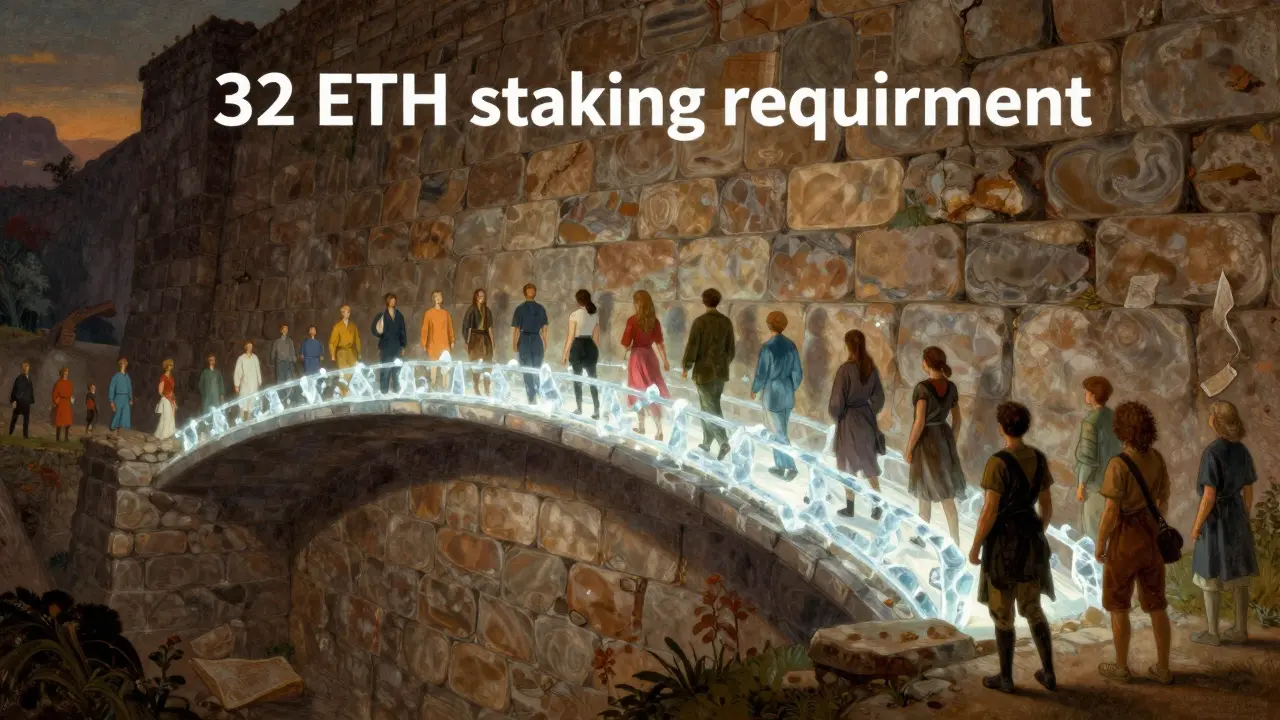
Imagine you want to earn rewards for securing the Ethereum network, but you don't have 32 ETH (which could be over $80,000 depending on the market) to run your own validator. Or perhaps you have that money, but you hate the idea of your funds being locked away where you can't touch them for months. This is the exact wall most people hit when they try to enter the world of staking. ether.fi Staked ETH (known as EETH) is designed to tear that wall down. It isn't just a way to stake your coins; it's a way to keep your money moving while it earns yield in the background.
The Basics: What Exactly is EETH?
EETH is a liquid restaking token (LRT) built on the Ethereum blockchain. In simple terms, when you give your ETH to the ether.fi protocol, they give you EETH in return. This token acts like a "receipt" that proves you own a certain amount of staked ETH plus whatever rewards that ETH has earned over time.
But there is a twist here. Unlike basic liquid staking, EETH incorporates EigenLayer, which is a protocol that lets stakers "restake" their ETH. This means your assets aren't just securing Ethereum; they are helping secure other software modules and services on top of the network, which opens up more ways to make money.
How the Money Actually Works
If you're wondering how you actually make a profit, it's not just one single stream of income. EETH holders essentially tap into four different reward channels:
- Base Staking Rewards: The standard yield you get from helping Ethereum validate blocks.
- Restaking Emissions: Extra rewards coming from the EigenLayer integration, which are aggregated weekly and rolled back into the token's value.
- Loyalty Points: Proprietary points from the ether.fi ecosystem that reward active participants.
- DeFi Yield: Because EETH is liquid, you can take it to a lending platform, lend it out, and earn interest on top of your staking rewards.
Currently, the wrapped version of the token, weETH, has shown yields around 2.8% APY, though this number shifts based on how many people are participating and the current state of the network.
The Technical Difference: eETH vs. weETH
When you start using the protocol, you'll notice two different versions of the token. It's important to know which one to pick depending on what you plan to do with your money.
| Feature | eETH (Rebasing) | weETH (Wrapped) |
|---|---|---|
| Reward Style | Balance increases automatically | Token value increases relative to ETH |
| DeFi Compatibility | Lower (harder for apps to track) | High (works with most DeFi apps) |
| Management | Passive (automatic compounding) | Standard trading/holding |
| Primary Use | Long-term holding/passive growth | Lending, borrowing, yield farming |
Why This Matters for the Average Holder
For a long time, Ethereum staking was a "rich person's game." If you didn't have 32 ETH, you had to use a centralized exchange. Those exchanges often take a big cut of your rewards and, more importantly, they hold your private keys. If the exchange goes bust, your money goes with it.
Ether.fi changes this by being non-custodial. This means you keep control of your withdrawal credentials. The protocol doesn't just take your coins and disappear into a black box; it uses a LiquidityPool to fund validators while you maintain the keys to your exit. It's a way to get institutional-grade yield without having to trust a single corporate entity with your life savings.
Moreover, the "liquid" part of liquid restaking means you aren't trapped. If the market crashes or you suddenly need cash for a real-world emergency, you can sell your EETH on a decentralized exchange (DEX) instantly. You don't have to wait for a formal "unbonding period" that can take days or weeks in traditional staking.
The Bigger Picture: Beyond Just Staking
Ether.fi isn't trying to be just a staking tool; they are building a full-scale financial hub. They've already integrated with over 400 DeFi protocols, making EETH a versatile asset. But they are also expanding into other areas to capture more of the market:
- eBTC: A version of Bitcoin that allows holders to optimize their yield, bringing the "staking" mindset to the BTC ecosystem.
- eUSD: A stablecoin staking product for those who want a more fixed, predictable income stream without the volatility of ETH.
- Crypto Cash Card: A non-custodial card that lets you spend your crypto balances in the real world without giving up your keys to a centralized bank.
This strategy turns a simple staking token into a gateway for an entire on-chain financial lifestyle. You start by staking your ETH, and you end up using that value to pay for your coffee or lend to others in the ecosystem.
Risks and Reality Checks
No single asset in crypto is a "sure thing," and EETH is no exception. The primary risk comes from the complexity of the "stack." You are layering a protocol (ether.fi) on top of another protocol (EigenLayer) on top of the base layer (Ethereum). If there is a bug in any of those layers, it can affect your assets.
Market volatility is also a factor. Data shows EETH has experienced significant swings, at one point trading 27% below its all-time high. While the total value locked (TVL) is massive-around $9 billion-this doesn't eliminate the risk of price fluctuations. It just means there is a lot of trust and capital currently supporting the system.
Do I need 32 ETH to start earning with EETH?
No. One of the main benefits of ether.fi is that it removes the 32 ETH minimum requirement. You can deposit any amount of ETH and receive the equivalent in EETH, allowing you to earn staking rewards regardless of your budget.
Is EETH the same as regular staked ETH (stETH)?
Not exactly. While both are liquid staking tokens, EETH is a "restaking" token. This means it integrates with EigenLayer to provide additional reward streams beyond the standard Ethereum validation rewards that you would get with a basic LST like stETH.
What happens if I want my original ETH back?
You have two main options. You can go through the protocol's official withdrawal process, or you can simply sell your EETH/weETH on a decentralized exchange for ETH. The latter is usually faster and provides immediate liquidity.
Is ether.fi custodial or non-custodial?
It is non-custodial. The protocol is designed so that users maintain control over their withdrawal credentials. This is a major security advantage over centralized exchanges where the company controls your keys.
How are rewards paid out in eETH?
eETH uses a rebasing mechanism. This means your token balance actually increases in your wallet automatically as rewards accrue. You don't need to manually "claim" or "harvest" your earnings; they just appear as more tokens.
Liquid restaking is definitely a game changer for those of us without a massive stash of ETH. It's basically the evolution of LSTs, allowing the same capital to secure multiple layers. Just gotta be mindful of the slashing risks since you're exposing your ETH to more potential failure points than just the base consensus layer.
Love seeing options for people who don't have 32 ETH! 🚀 It makes the whole ecosystem so much more inclusive for everyone. Keep exploring these tools! ✨💖
oh cool so we just layer risk on top of risk on top of more risk until the whole thing collapses like a house of cards... sounds like a plan lol
the weETH version is definitely the way to go if you're planning to move your funds into a vault or a lending pool because most smart contracts just can't handle the rebasing balance of eETH without some serious headache
Imagine thinking "non-custodial" actually means you're safe while you're blindly dumping money into a complex stack of protocols. Real geniuses at work here.
it is a great way to get started for anyone feeling overwhelmed by the technical side of staking just remember to double check your wallet permissions and always keep a bit of eth for gas fees so you dont get stuck
The synergy between the EigenLayer AVS framework and the liquidity provision of eETH is truly groundbreaking!!! It maximizes capital efficiency while maintaining a decentralized ethos, provided the smart contract audits are rigorous enough!!! 🌟✨
This looks like a very positive step forward for the community.
If you guys are looking at the long term, the rebasing eETH is usually easier since you just watch your balance grow without needing to trade or wrap anything. It's the most 'set it and forget it' approach for passive income.
Just chilling and watching my tokens grow is the best feeling 🌸 hope everyone finds the strategy that works for them! 🌈