
Have you ever stumbled upon a cryptocurrency ticker like ICPSwap Token and wondered what it actually does? You aren't alone. With thousands of tokens launching every year, distinguishing between hype and utility can be tough. As of May 2026, the ICPSwap Token (ICS) sits at a complex intersection of technology, governance, and market volatility. It isn't just another meme coin; it serves as the lifeblood for a specific decentralized exchange ecosystem. But does that make it a good investment? Or is it a high-risk gamble on niche blockchain adoption?
To understand where ICS stands today, we need to look past the price charts and dig into its mechanics, its place within the Internet Computer Protocol, and the real-world risks involved in trading such a fragmented asset.
What Is ICPSwap Token (ICS)?
At its core, ICPSwap Token (a utility and governance token for the ICPSwap platform) is designed to power the operations of ICPSwap. Think of ICPSwap as the primary decentralized exchange (DEX) built specifically for the Internet Computer Protocol (ICP) ecosystem. While Ethereum has Uniswap and Solana has Raydium, the ICP network needed its own native trading infrastructure. That’s where ICPSwap comes in.
The token has two main jobs:
- Governance: Holding ICS gives you a voice. You can vote on protocol upgrades, fee structures, and future development directions. This decentralizes control, moving power away from a single company and into the hands of the community.
- Utility: The token is integrated into the platform’s economic model. It facilitates transactions and incentivizes liquidity providers who keep the markets running smoothly.
Unlike generic tokens that promise "future utility," ICS was launched with a total supply cap of 1 billion coins. This fixed ceiling is crucial because it prevents infinite inflation, a common pitfall in many crypto projects.
The Deflationary Mechanism: Buyback and Burn
One of the most compelling features of ICS is its deflationary design. In simple terms, the supply of ICS decreases over time. How? Through a "buyback and burn" mechanism.
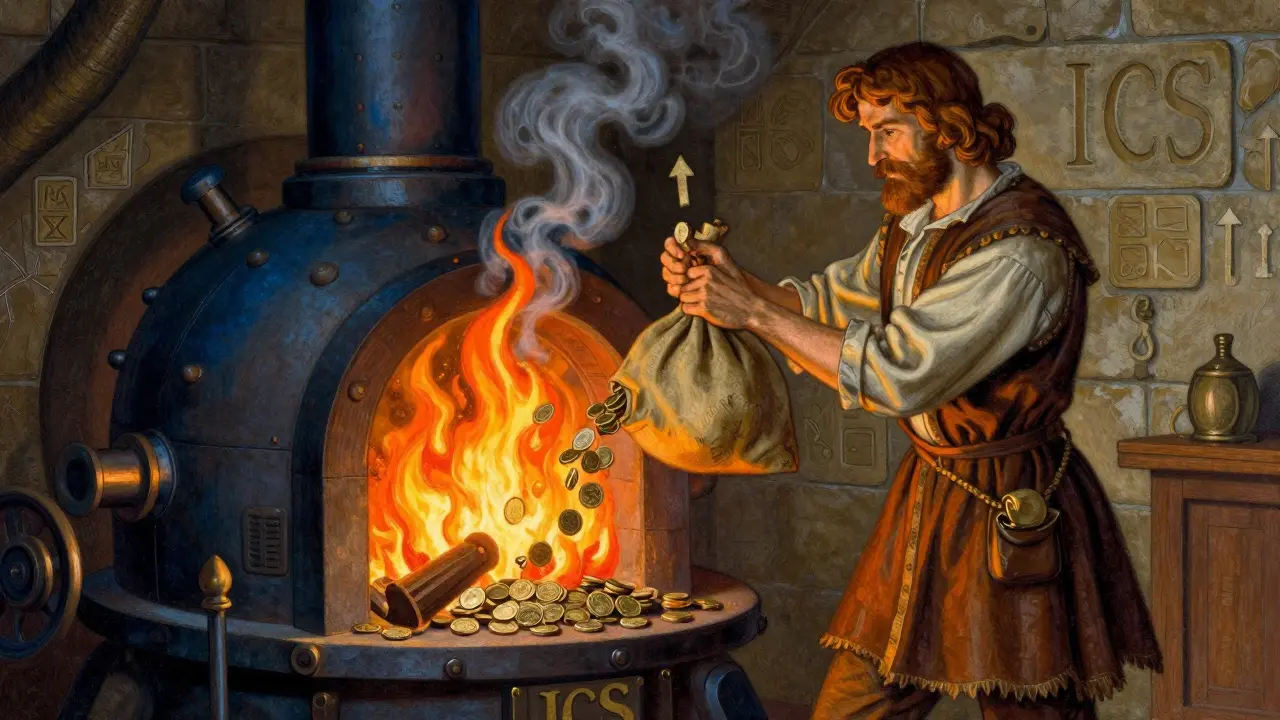
When users trade on ICPSwap, they pay fees. Instead of keeping all this revenue, the protocol uses a portion of these fees to buy back ICS tokens from the open market. Once purchased, these tokens are sent to a "burn address"-essentially deleted forever. This reduces the circulating supply.
| Step | Action | Impact on Supply |
|---|---|---|
| User Trades | Pays transaction fee on ICPSwap | No immediate change |
| Protocol Revenue | Collects fees in stablecoins or other assets | No immediate change |
| Buyback | Uses revenue to purchase ICS from the market | Tokens removed from circulation temporarily |
| Burn | Sends purchased tokens to a dead wallet | Permanent reduction in total supply |
This model mirrors strategies used by larger players like Binance (BNB). The theory is straightforward: if demand stays constant or grows while supply shrinks, the price should theoretically rise. However, this only works if the platform generates significant trading volume. If people stop using ICPSwap, the buybacks dry up, and the deflationary benefit disappears.
Price Volatility and Market Fragmentation in 2026
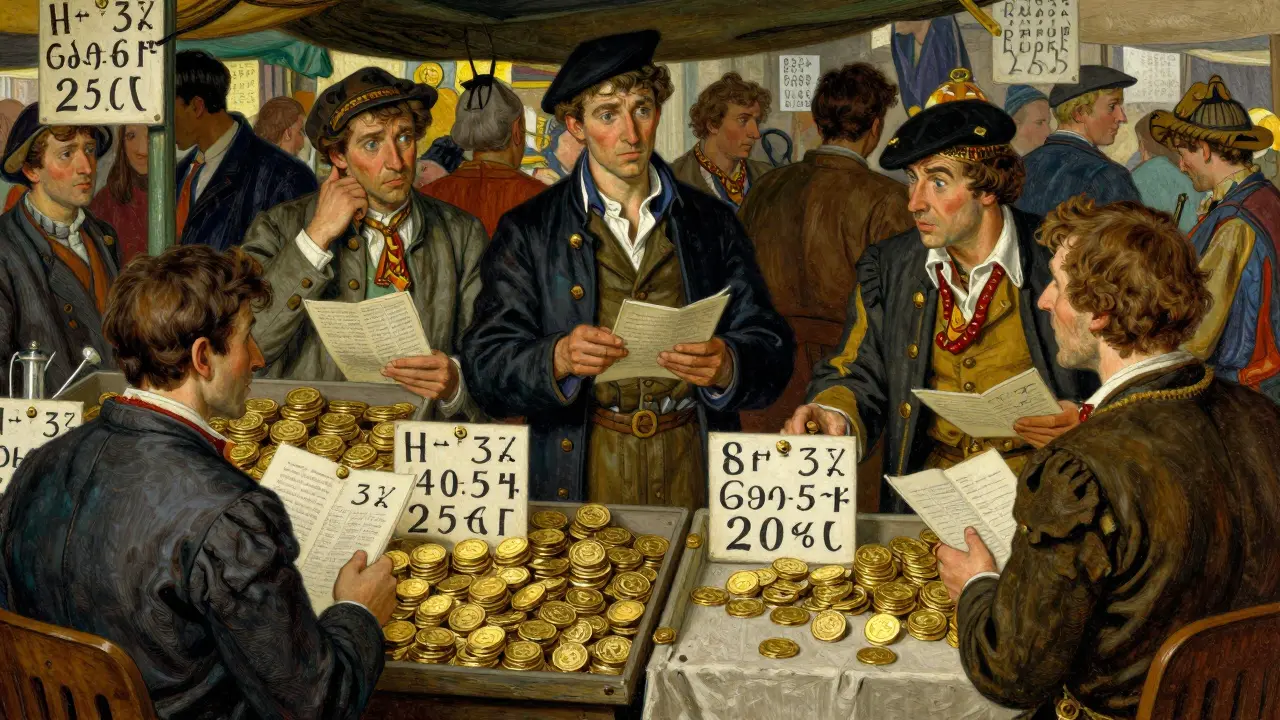
If you’ve tried to check the price of ICS recently, you might have noticed something confusing: different exchanges show wildly different prices. This is one of the biggest red flags for new investors.
As of May 9, 2026, the data paints a picture of extreme fragmentation:
- Bybit: Reports a price around $0.0047, with a 24-hour range between $0.0035 and $0.0048.
- Coinbase: Shows a price near $0.0031, but also lists higher values up to $0.0080 depending on the specific order book depth.
- CoinMarketCap: Aggregates data to show an average around $0.0035.
- Crypto.com: Lists it lower, around $0.0028.
Why the discrepancy? Because ICS lacks deep liquidity. Unlike Bitcoin or Ethereum, which trade billions of dollars daily across hundreds of venues, ICS trades relatively small volumes. On some platforms, the 24-hour trading volume is less than $1,000. On others, like Coinbase, it hits over $40,000. This means a large sell order on a low-volume exchange could crash the price locally, while the price remains stable elsewhere.
This fragmentation creates arbitrage opportunities for sophisticated traders but poses serious risks for casual holders. You might see your portfolio value jump 10% on one app, only to find it down 5% on another when you try to sell.
Historical Performance: From ATH to Current Levels
To put current prices in perspective, let’s look at history. ICS reached its All-Time High (ATH) on July 22, 2024, at approximately $0.0360. Since then, it has suffered a massive correction, dropping more than 80% from that peak. This decline aligns with broader crypto market cycles and the intense competition facing smaller DEX tokens.
However, the story isn’t entirely negative. The token hit its All-Time Low (ATL) on October 10, 2025, at $0.002217. As of May 2026, prices have recovered roughly 48-50% from that bottom. Some analysts point to a recent 7-day increase of over 23% as a sign of renewed interest, outperforming the broader crypto market’s 4.6% gain during the same period.
This rebound suggests that the worst of the bearish pressure may be easing, but it also highlights how volatile the asset remains. A 23% weekly gain is impressive, but it follows a multi-year downtrend. Recovery doesn’t mean stability.
Technical Infrastructure: NFID and Wallet Access
One area where ICPSwap tries to differentiate itself is user experience. Traditional DeFi often requires complex seed phrases and hardware wallets. ICPSwap integrates with NFID (Non-Fungible Identifier Wallet technology).
NFID allows users to create self-sovereign wallets using email addresses or passkeys. This lowers the barrier to entry significantly. You don’t need to memorize a 24-word recovery phrase to start swapping tokens on the Internet Computer Protocol. For users in regions with restricted banking access, this anonymity and ease of use are major advantages.
However, convenience comes with trade-offs. Custodial-like solutions can sometimes introduce centralization risks or dependency on third-party services. Users must trust that their identity provider remains secure and operational.
Risks and Challenges: What Could Go Wrong?
Before buying any crypto, especially one ranked #5054 by market cap, you need to understand the risks. Here are the critical factors to consider:
- Liquidity Risk: With low trading volumes, exiting a large position can be difficult. You might not find enough buyers at the price you want, forcing you to sell at a loss.
- Ecosystem Dependency: ICS’s success is tied directly to the growth of the Internet Computer Protocol. If ICP loses relevance or fails to attract developers, ICPSwap will struggle regardless of its own merits.
- Regulatory Uncertainty: Crypto regulations vary globally. Some platforms, like Crypto.com, have noted restrictions on trading ICS in certain jurisdictions. Regulatory crackdowns could limit where you can trade or hold the token.
- Competition: The DEX space is crowded. Even within the ICP ecosystem, competitors may emerge. Outside it, giants like Uniswap continue to expand across multiple chains, offering deeper liquidity and brand recognition.
The fully diluted valuation (FDV) of ICS ranges from $3.29 million to nearly $8 million, depending on the source. Compare this to Uniswap, which boasts a market cap in the billions. The gap illustrates the scale challenge ICS faces. To reach mainstream adoption, it needs orders of magnitude more users and volume.
Who Should Consider ICS?
ICPSwap Token isn’t for everyone. It suits specific types of investors:
- Believers in the ICP Ecosystem: If you think the Internet Computer Protocol will become a major player in web3, ICS offers direct exposure to its financial layer.
- Risk-Tolerant Traders: Those comfortable with high volatility and fragmented pricing can potentially profit from short-term swings and arbitrage.
- Governance Participants: If you care about decentralized decision-making and want to influence the direction of a growing DEX, holding ICS gives you voting power.
It is likely not suitable for:
- Conservative Investors: The high risk of permanent loss makes it unsuitable for capital preservation.
- Beginners Seeking Simplicity: Navigating fragmented exchanges and understanding DEX mechanics requires a learning curve.
- Those Looking for Quick Gains: Past performance does not guarantee future results. The 80% drop from ATH shows how quickly sentiment can shift.
Final Thoughts on ICPSwap Token
ICPSwap Token represents a fascinating experiment in niche blockchain economics. Its deflationary model and integration with NFID offer genuine utility within the Internet Computer Protocol ecosystem. However, the current market reality-characterized by low liquidity, price fragmentation, and significant distance from all-time highs-demands caution.
If you decide to engage with ICS, do so with eyes wide open. Use reputable exchanges, monitor liquidity conditions closely, and never invest more than you can afford to lose. The crypto market rewards patience and research, not impulse.
Is ICPSwap Token (ICS) a good investment in 2026?
Whether ICS is a "good" investment depends entirely on your risk tolerance and belief in the Internet Computer Protocol ecosystem. It carries high risk due to low liquidity, price fragmentation, and a significant drop from its all-time high. It may suit speculative traders or long-term believers in ICP, but it is not suitable for conservative investors seeking stability.
Why is the price of ICS different on various exchanges?
The price differences stem from fragmented liquidity. ICS trades with relatively low volume on many platforms. When trading activity is thin, even small buy or sell orders can cause significant price swings on individual exchanges without affecting others. This lack of unified liquidity leads to discrepancies between platforms like Bybit, Coinbase, and CoinMarketCap.
What is the maximum supply of ICPSwap Token?
The maximum supply of ICPSwap Token is capped at 1 billion ICS coins. This fixed supply is part of its deflationary design, intended to prevent inflation and support value appreciation through buyback and burn mechanisms funded by platform trading fees.
How does the buyback and burn mechanism work for ICS?
ICPSwap uses a portion of the fees generated from user trades to purchase ICS tokens from the open market. These purchased tokens are then permanently destroyed (burned), reducing the circulating supply. Over time, if trading volume remains consistent, this continuous reduction in supply can create upward pressure on the token's price.
Can I use my regular email to access ICPSwap?
Yes. ICPSwap integrates with NFID (Non-Fungible Identifier) Wallet technology, which allows users to create and manage self-sovereign wallets using standard email addresses or passkeys. This eliminates the need for complex seed phrases and lowers the barrier to entry for new users.
Where can I buy ICPSwap Token (ICS)?
As of May 2026, ICS is available on several platforms including Coinbase, Bybit, LBank, and via Binance's Web3 Wallet. However, availability varies by region and platform policy. Always check local regulations and platform-specific listings before attempting to purchase, as some exchanges may restrict trading based on jurisdiction.