You’ve probably heard of Bitcoin and Ethereum. You might even know about Solana or Cardano. But have you heard of Sketch Coin? It’s not exactly a household name in the crypto world right now. In fact, if you look at the charts, it looks like a ghost town compared to the giants. So, why does it exist? And more importantly, is it worth your time?
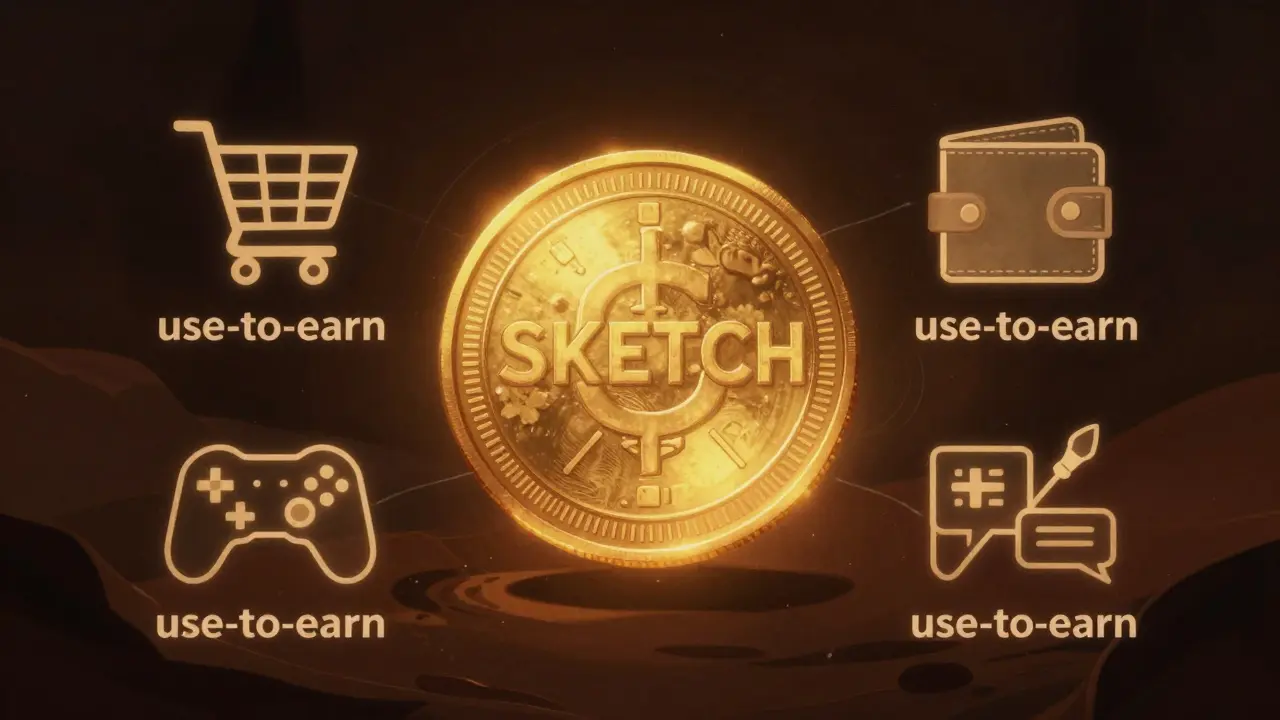
Sketch Coin, often traded under the ticker symbols SKETCH or SKET, is a micro-cap cryptocurrency launched in 2021. It lives on the Polygon blockchaina Layer 2 scaling solution for Ethereum that offers low fees and fast transactions. The project promises something ambitious: a 1,000-year ecosystem where you earn coins by doing things-paying, holding, playing games, creating content, and even talking.
It sounds great on paper. But when you dig into the data from mid-2026, the picture gets complicated. Let’s break down what Sketch Coin actually is, how its "use-to-earn" model works, and whether there’s any real value behind the hype-or if it’s just another forgotten altcoin.
The Core Concept: What Is Use-to-Earn?
Most crypto projects fall into simple buckets. You buy Bitcoin to hold it. You stake Ethereum to earn rewards. Some games let you play-to-earn. Sketch Coin tries to combine all of these into one big bucket called "use-to-earn." According to market data aggregators like CoinMarketCapa leading platform for tracking cryptocurrency prices and market data, the ecosystem is built around five pillars:
- Pay-to-Earn: Using SKETCH for transactions.
- Possess-to-Earn: Simply holding the token in your wallet.
- Play-to-Earn: Participating in gaming activities within the ecosystem.
- Create-to-Earn: Generating content or assets.
- Talk-to-Earn: Engaging socially with other users.
The idea is that the more you interact with the network, the more SKETCH you accumulate. Theoretically, this creates a sticky community where the token has actual utility rather than just being a speculative asset. However, as of June 2026, detailed documentation on how these rewards are calculated-who decides what counts as "talking" or "creating"-is scarce. There are no public whitepapers with clear mathematical formulas for reward distribution, which leaves a lot of room for skepticism.
Tokenomics: The Supply Discrepancy
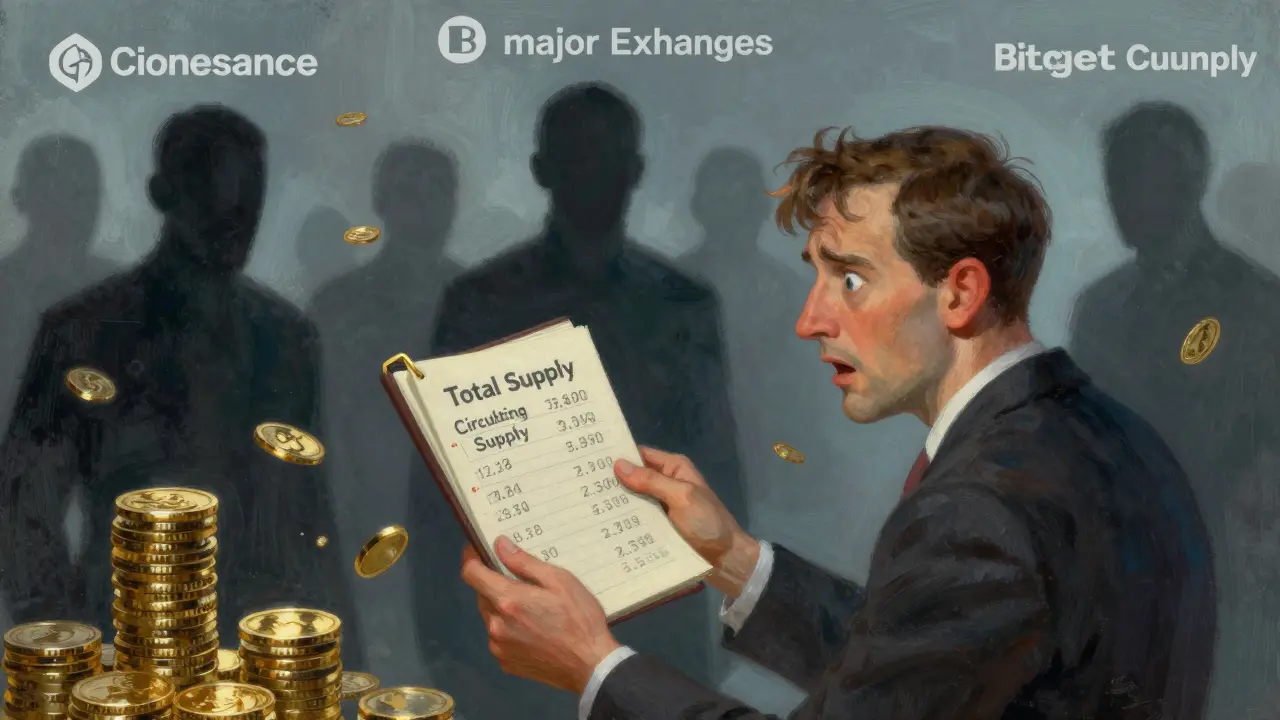
If you’re looking at Sketch Coin, the first thing that will confuse you is the numbers. Different platforms report wildly different data. This isn’t uncommon for small tokens, but it’s a red flag you need to pay attention to.
| Platform | Total Supply | Circulating Supply | Max Supply | Rank |
|---|---|---|---|---|
| CoinMarketCap | 10 Billion | ~4.42 Billion | 100 Billion | #4625 |
| Bitget | 10 Billion | 0 | 100 Billion | #5240 |
| Coinbase | 10 Billion | 0 | N/A | N/A |
| Yahoo Finance | 100 Billion | 0 | 100 Billion | N/A |
Notice the pattern? Most sources agree the total supply minted so far is around 10 billion tokens, with a hard cap of 100 billion. But the circulating supply-the amount actually available for trading-is reported as zero by some major exchanges like Coinbase and Bitget, while CoinMarketCap shows over 4 billion in circulation. This inconsistency suggests that much of the token might be locked in contracts, held by developers, or simply not actively traded on the largest venues. For an investor, this means liquidity is extremely thin. You could buy a large amount without moving the price much, but selling it quickly might crash the value.
Price History: From Hype to Dust
Let’s talk money. Sketch Coin had its moment in the sun back in January 2023. At that time, it hit an all-time high (ATH) of $0.0054 per token. That doesn’t sound like much, but in crypto terms, it was a peak. Fast forward to February 2026, and the price had plummeted by over 96% from that high, hovering around $0.00018. It even touched an all-time low (ATL) of $0.00011 in early 2026.
This volatility is typical for micro-cap coins. When interest fades, liquidity dries up, and the price drops. The daily trading volume is minuscule-often between $4,000 and $23,000. Compare that to Bitcoin’s billions in daily volume, and you’ll see why Sketch Coin is considered a high-risk, speculative asset. It’s not widely recognized, and as Bitget notes, its market value is largely unproven outside of niche trading circles.
Technical Foundation: Running on Polygon
Technically, Sketch Coin is an ERC-20 style token running on the Polygon network. This is a crucial detail. Because it’s on Polygon, transactions are cheap and fast. You don’t need to worry about the high gas fees associated with the main Ethereum chain. To hold SKETCH, you can use standard wallets like MetaMask or Trust Wallet, provided they are configured to support Polygon.
The project claims to have an open-source smart contract repository on GitHub (`sketchcoin/sketchcoin-contract`). This is a good sign for transparency, allowing developers to inspect the code. However, there are no independent security audits from reputable firms listed in public records. Without an audit, you’re trusting the code based on faith rather than verification. In the crypto world, that’s a risky bet.
Who Is Behind Sketch Coin?
Here’s the million-dollar question: Who made this? Unlike Ethereum, which has Vitalik Buterin, or Bitcoin, which has Satoshi Nakamoto (even if anonymous), Sketch Coin’s leadership is invisible. Major data providers like Coinbase, Yahoo Finance, and LiquidityFinder do not list any founders, core developers, or registered corporate entities. The project maintains a relatively anonymized structure.
There is an official X (Twitter) account under the handle `@sketchsystem`, and the GitHub repo exists, but there’s no team page with photos or bios. This lack of accountability is common in the altcoin space, especially for micro-caps. It raises questions about long-term commitment. If the team disappears, who maintains the ecosystem? Who fixes bugs? Currently, there’s no clear answer.

Is Sketch Coin a Good Investment?
I’m not a financial advisor, but I can tell you what the data says. Sketch Coin is a speculative asset. It sits in the bottom tier of cryptocurrency rankings (around #4600-#5200). Its market cap is under $1 million. It has no major partnerships, no documented institutional backing, and a fragmented user base of only about 2,800 holders.
Proponents argue that the "1,000-year ecosystem" narrative offers long-term stability and that the multi-faceted earning model could attract users if executed well. They point to the low entry price-you can buy millions of tokens for a few dollars-as potential upside if the project gains traction.
Critics, however, highlight the extreme drawdown from its ATH, the lack of liquidity, and the absence of verifiable utility. The "use-to-earn" features remain vague. Are there actual games people are playing? Is there a marketplace where people are paying for goods? As of mid-2026, the evidence is thin. Most activity seems to be speculative trading rather than organic usage.
How to Buy Sketch Coin (If You Still Want To)
If you decide to take the risk, here’s how you generally acquire SKETCH:
- Set Up a Wallet: Download MetaMask or Trust Wallet. Configure it to connect to the Polygon network.
- Fund Your Wallet: Buy MATIC (Polygon’s native token) on a major exchange like Coinbase or Binance and transfer it to your wallet. You need MATIC to pay for transaction fees.
- Find a DEX or CEX: Sketch Coin is listed on smaller centralized exchanges like Bitget and potentially decentralized exchanges (DEXs) on Polygon. Check current listings on CoinMarketCap for active pairs (likely SKETCH/USDT).
- Swap Tokens: On the exchange, swap your USDT or MATIC for SKETCH. Be aware of slippage due to low liquidity.
- Store Safely: Keep your tokens in your non-custodial wallet. Never share your seed phrase.
Remember, because liquidity is low, buying or selling large amounts can significantly impact the price. Start small if you’re testing the waters.
The Verdict: Niche Experiment or Dead End?
Sketch Coin represents a specific type of crypto project: the ambitious, low-budget experiment. It aims to build a massive, long-term social and economic ecosystem but lacks the resources, visibility, and clear execution plan to compete with established players. The tokenomics are confusing, the team is hidden, and the price has crashed dramatically from its highs.
For most investors, Sketch Coin is too risky. It’s better suited for those who enjoy hunting for obscure gems and understand the mechanics of Polygon-based tokens. If you’re looking for stable growth or proven utility, this isn’t it. But if you’re curious about the "use-to-earn" concept and want to see if a small community can sustain a 1,000-year vision, SKETCH offers a window into the wilder side of crypto innovation. Just don’t bet the farm on it.
What is the difference between SKETCH and SKET?
SKETCH and SKET are ticker symbols used by different data providers for the same underlying asset, Sketch Coin. CoinMarketCap and Bitget typically use SKETCH, while Yahoo Finance and Crypto.com may use SKET. The discrepancy in supply numbers between these tickers often stems from inconsistent metadata reporting across platforms rather than two different tokens.
Is Sketch Coin safe to invest in?
Like all cryptocurrencies, Sketch Coin carries significant risk. It is a micro-cap asset with low liquidity, high volatility, and an anonymous development team. There are no independent security audits of its smart contracts. You should only invest what you can afford to lose entirely.
How does the "use-to-earn" model work?
The model promises rewards for five activities: paying, possessing (holding), playing games, creating content, and social interaction. However, specific details on how these rewards are calculated and distributed are not publicly documented in transparent technical papers as of 2026.
Which blockchain does Sketch Coin run on?
Sketch Coin operates on the Polygon blockchain. This means it uses Polygon’s infrastructure for transactions, offering lower fees and faster speeds compared to the main Ethereum network. Users need a Polygon-compatible wallet to store SKETCH.
Why is the circulating supply reported as zero on some sites?
Some exchanges and data aggregators report zero circulating supply because the tokens may be locked in smart contracts, held by insiders, or not actively traded on their specific platforms. This indicates very low liquidity and makes accurate market capitalization calculations difficult.