
Have you ever wondered where your dinner actually came from? For most of us, that question ends at the grocery store label. But for a growing number of food companies, tracking every step of the journey-from farm to fork-is becoming critical. This is where TE-FOOD, operating through its native cryptocurrency the TONE token, enters the picture.
If you stumbled upon this coin while scanning crypto charts, you might be confused by its low price or lack of buzz. Unlike Bitcoin or Ethereum, which promise financial freedom or decentralized computing, TE-FOOD has a very specific job: it powers a digital ledger for the global food industry. In this guide, we will break down what TE-FOOD actually does, how the TONE token functions as a license key rather than just an investment asset, and why its market performance tells a cautionary tale about utility tokens.
The Core Problem: Why Track Food on Blockchain?
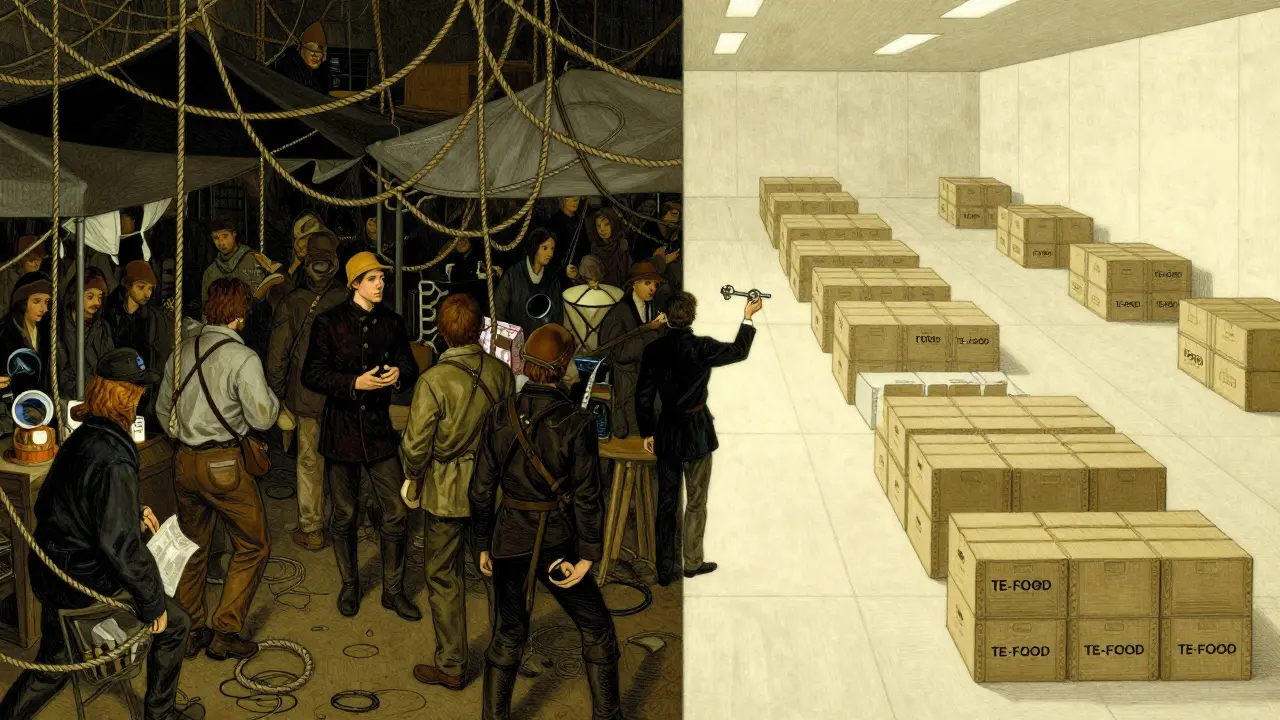
The global food supply chain is messy. It involves farmers, processors, distributors, logistics companies, and retailers. When a contamination issue arises-like salmonella in lettuce or E. coli in beef-companies often struggle to pinpoint exactly which batch caused the problem. Traditional databases are siloed; one company’s data doesn’t easily talk to another’s. This opacity leads to massive, costly recalls that waste good food and erode consumer trust.
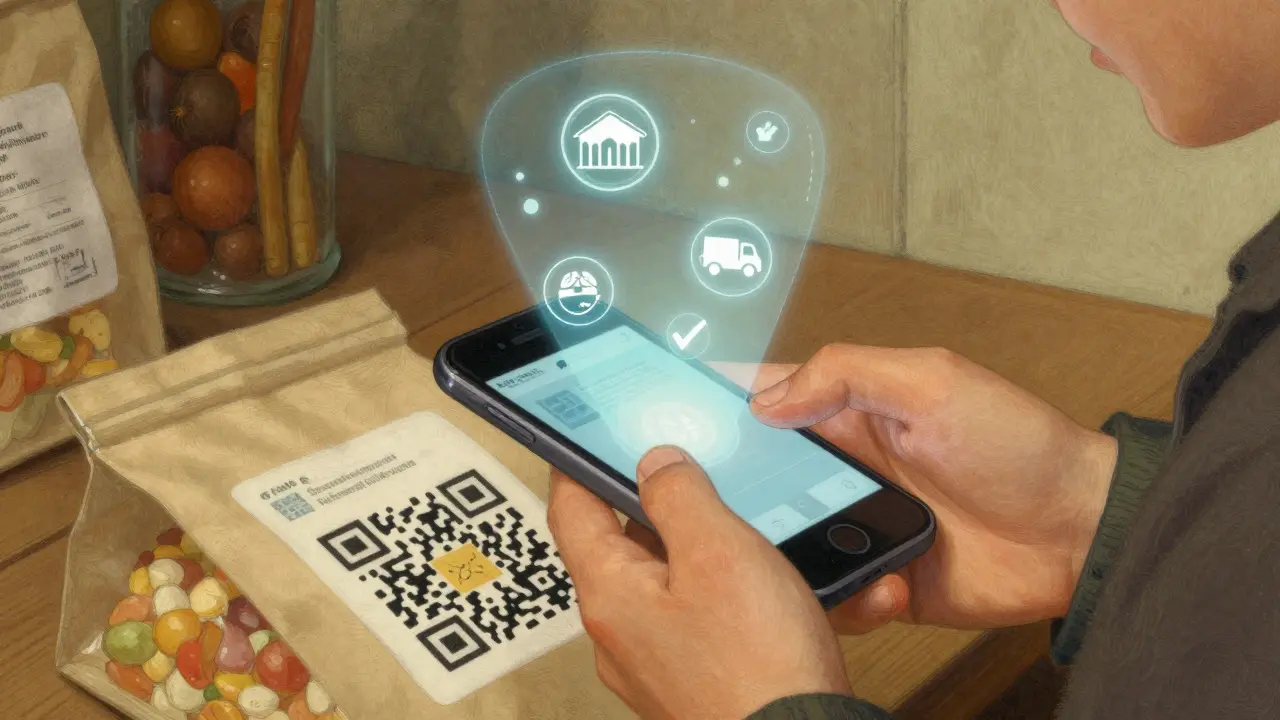
TE-FOOD was founded in 2016 to solve this exact friction. The platform uses blockchain technology to create a single, immutable record of truth. Every time a product changes hands, a new entry is added to the chain. Because blockchains cannot be altered retroactively without consensus, this creates a tamper-proof history. For consumers, this means scanning a QR code on a package could reveal not just the expiration date, but the farm location, harvest date, and transport conditions.
For businesses, the benefits go beyond safety. It helps with regulatory compliance, prevents counterfeiting of premium goods like wine or olive oil, and improves operational efficiency. If a brand can prove its supply chain is transparent, they can charge a premium for that trust.
How the TONE Token Works
This is where things get technical, but also interesting. TE-FOOD isn’t just a software company; it’s a tokenized ecosystem. The TONE token (sometimes referred to as TFD) serves as the fuel for this machine. However, it doesn’t work like a typical speculative coin you buy hoping it goes to the moon.
TONE operates as a utility token on the Ethereum blockchain using the ERC20 standard. Its primary function is acting as a software license. To use the TE-FOOD platform, businesses must hold a minimum amount of TONE tokens. Think of it like paying an annual subscription fee, but instead of sending money to a bank account, you lock up tokens in a smart contract.
This model creates a few unique dynamics:
- Access Control: You cannot access the network’s traceability features without holding the required token balance.
- Economic Incentive: As more businesses join the network, the demand for licenses (and thus tokens) theoretically increases.
- Decentralization: The system relies on masternodes maintained by both supply chain participants and the broader community, ensuring no single entity controls the data.
In essence, TONE bridges the gap between physical goods and digital verification. It turns the act of "tracking" into a verifiable, cryptographically secure event.
Market Performance and Price Reality
Let’s address the elephant in the room: the price. If you are looking at TONE today, you will see numbers that look like fractions of a penny. As of May 2026, the token trades in the range of $0.0001 to $0.0003, depending on the exchange. This is a stark contrast to its all-time high of $0.12 back in May 2021.
Why did it drop so much? Several factors contribute to this decline:
- Lack of Liquidity: Trading volume is extremely low. On major decentralized exchanges like Uniswap V2, daily volume often hovers under $50. This means there are very few buyers and sellers, leading to wide spreads and slippage.
- Market Sentiment: The broader crypto market shifted away from "altcoins" with niche utilities toward major assets like Bitcoin and Ethereum, or newer narratives like AI and Layer-2 scaling solutions.
- Token Dilution: With a circulating supply of roughly 620 million out of a max supply of 1 billion, there is still significant inflation potential. New tokens entering circulation can suppress price if demand doesn’t keep pace.
It is crucial to understand that TE-FOOD’s underlying business metrics tell a different story than its token price. Reports indicate the platform serves over 6,000 business customers and processes 400,000 operations daily. This suggests the software is working and being used. However, the market has not rewarded the token holders for this usage. The disconnect highlights a common pitfall in crypto: successful enterprise adoption does not automatically translate to token appreciation.
| Metric | Value / Status |
|---|---|
| Token Symbol | TONE (also TFD) |
| Blockchain | Ethereum (ERC20) |
| All-Time High | $0.12 (May 2021) |
| Current Price Range | $0.0001 - $0.0003 |
| Circulating Supply | ~620 Million |
| Max Supply | 1 Billion |
| Primary Use Case | Software License for Food Traceability |
| Market Cap Rank | #6135+ (Low Tier) |
Who Is TE-FOOD For?
TE-FOOD is not designed for the average retail investor looking for quick gains. Its primary audience consists of two distinct groups:
1. Food Industry Enterprises: Large-scale producers, distributors, and retailers who need to comply with strict food safety regulations (such as the FDA’s FSMA rules in the US). These companies benefit from the ability to instantly trace contamination sources, reducing recall costs and protecting their brand reputation.
2. Conscious Consumers: While most users interact with the tech indirectly, some apps allow consumers to scan products. If you care deeply about organic certification, fair trade practices, or carbon footprint transparency, TE-FOOD provides the infrastructure to verify those claims.
For the casual crypto trader, TE-FOOD represents a high-risk, low-liquidity asset. The lack of presence on major centralized exchanges like Binance or Coinbase Pro makes buying and selling difficult. You would likely need to use a decentralized exchange (DEX) like Uniswap, connecting a wallet such as MetaMask directly to the Ethereum network. Be aware that gas fees on Ethereum can sometimes exceed the value of the tokens you are trading.
Risks and Considerations
Before engaging with TONE, consider these risks carefully:
- Liquidity Risk: With daily volumes in the double digits, selling a large position could crash the price significantly due to thin order books.
- Regulatory Uncertainty: While utility tokens are generally safer than securities, regulators are increasingly scrutinizing projects that blend traditional SaaS models with crypto licensing.
- Competition: Other blockchain projects, such as IBM Food Trust (built on Hyperledger), dominate the enterprise space. TE-FOOD competes against well-funded incumbents that do not rely on volatile token economics.
- Data Accuracy: Blockchain ensures records aren’t changed, but it doesn’t ensure the initial data was correct. If a farmer inputs false data at the start, the entire chain reflects that error ("garbage in, garbage out").
Conclusion: Utility vs. Speculation
TE-FOOD stands as an interesting case study in the intersection of real-world logistics and cryptocurrency. It solves a genuine problem-food safety and transparency-with robust technology. The platform has achieved meaningful enterprise adoption, processing hundreds of thousands of transactions daily.
However, the TONE token itself has struggled to capture value. Its price has collapsed from its 2021 highs, and liquidity remains dangerously low. For investors, this serves as a reminder that a useful product does not guarantee a profitable token. For businesses, it offers a glimpse into how blockchain can streamline complex supply chains. Whether TE-FOOD can revitalize its token economy depends on whether it can shift from a pure licensing model to one that generates direct revenue streams for token holders-a challenge many utility projects have failed to overcome.
Is TE-FOOD (TONE) a good investment in 2026?
Investing in TONE carries extreme risk. The token has lost over 99% of its value since its 2021 peak, and trading volume is exceptionally low. While the underlying platform is active, the token lacks strong market support or liquidity. It should only be considered by experienced traders who understand the risks of low-cap utility tokens.
Where can I buy TONE tokens?
TONE is primarily traded on decentralized exchanges (DEXs) like Uniswap V2 on the Ethereum network. It is not listed on major centralized exchanges like Coinbase or Binance. To buy it, you will need an Ethereum-compatible wallet (like MetaMask) and ETH to pay for gas fees and swap for TONE.
What is the main purpose of the TONE token?
The TONE token acts as a utility license. Businesses must hold a certain amount of TONE to access the TE-FOOD blockchain platform for food traceability. It is not designed primarily for speculation but to facilitate access to the network’s services.
Does TE-FOOD track individual food items?
Yes, TE-FOOD tracks items and batches throughout the supply chain. From production to delivery, each step is recorded on the blockchain. Consumers can potentially scan QR codes to view this history, verifying origin and handling conditions.
Why is the TONE price so low compared to other cryptos?
The low price is due to several factors: minimal trading volume, lack of listings on major exchanges, high total supply (1 billion max), and limited speculative interest. Additionally, the token’s value is tied to enterprise licensing needs rather than broad market hype, which has not driven significant price growth.
Is TE-FOOD safe from hacking?
As an ERC20 token on Ethereum, TONE inherits the security of the Ethereum blockchain, which is highly secure. However, smart contracts always carry some risk. Users should verify contract addresses via official sources like CoinGecko to avoid scams. The platform’s data integrity depends on accurate input from supply chain partners.
What is the difference between TONE and TFD?
TONE and TFD refer to the same asset within the TE-FOOD ecosystem. Different exchanges or data aggregators may use one ticker symbol over the other. Always check the contract address to ensure you are interacting with the correct token.