
Imagine locking in your future earnings from a savings account today, regardless of whether interest rates crash tomorrow. That was the promise of Unreal Finance is a yield futures platform designed to let users tokenize their future DeFi yields through smart contracts. Also known as the UGT project, it aimed to act as a multichain layer sitting on top of existing decentralized finance protocols. However, if you're looking at the charts today, you'll see a starkly different reality: a project that has almost entirely vanished from the active crypto map.
For those wondering if Unreal Finance is still a viable investment or a tool for hedging, the short answer is no. While the concept was innovative for 2021, the actual execution failed to keep pace. The project is now widely considered defunct, with virtually zero trading volume and a community that has long since moved on. To understand what happened, we need to look at how it was supposed to work and where it all fell apart.
How Unreal Finance Was Supposed to Work
At its core, Unreal Finance wanted to solve a major problem in DeFi: interest rate volatility. In a standard lending protocol like Aave, the amount you earn in interest fluctuates. If you're a professional lender, that uncertainty is a risk. Unreal Finance proposed a way to "tokenize" that yield.
The system was built around a few key capabilities:
- Interest Rate Hedging: Lenders could lock in a specific rate, protecting themselves if market yields dropped.
- Yield Speculation: Traders could bet on whether interest rates in specific protocols would rise or fall.
- Arbitrage: Users could potentially spot price differences in yield across different blockchains and trade the difference.
- Early Liquidity: Instead of waiting months to collect interest, users could sell their future yield tokens immediately for upfront cash.
By acting as a layer on top of other protocols, Unreal Finance didn't want to be a bank itself; it wanted to be the marketplace where the "contracts" for those bank interests were traded.
The UGT Token: Economics and the Crash
The UGT token was the engine of the ecosystem. With a total supply of 200,000,000 tokens, the project raised a significant amount of capital-roughly $3.15 million across several funding rounds. Early investors in the Seed and Private rounds bought in at prices ranging from $0.05 to $0.095.
The hype peaked during the Token Generation Event (TGE) on August 25, 2021. On that day, UGT hit its all-time high of $0.3771. However, this peak was short-lived. The project suffered a catastrophic decline, losing over 99.9% of its value. Today, the token trades for a fraction of a cent, around $0.0003446, and most major exchanges show zero trading volume. This pattern-a massive spike at launch followed by a total collapse-is often a red flag for what the industry calls "pump-and-dump" dynamics.
| Round | Price | Unlock Terms | Status |
|---|---|---|---|
| Seed Round | $0.05 | 10% day 30, then monthly | Expired |
| Private Round | $0.095 | 20% TGE, then monthly | Expired |
| Public Round | $0.12 | 100% unlocked at TGE | Expired |
| All-Time High | $0.3771 | August 25, 2021 | Peak |

Comparing Unreal Finance to the Competition
Unreal Finance wasn't the only project trying to tackle yield derivatives. It entered a crowded field alongside platforms like Hegic, Opyn, and BarnBridge. While those projects offered broader options trading, Unreal Finance tried to carve out a niche specifically in yield tokenization.
The real winner in this space turned out to be Pendle Finance. While Unreal Finance vanished, Pendle successfully implemented similar concepts, maintaining millions of dollars in Total Value Locked (TVL). The difference was simple: Pendle delivered a working product and a sustainable ecosystem, whereas Unreal Finance struggled with basic functionality.
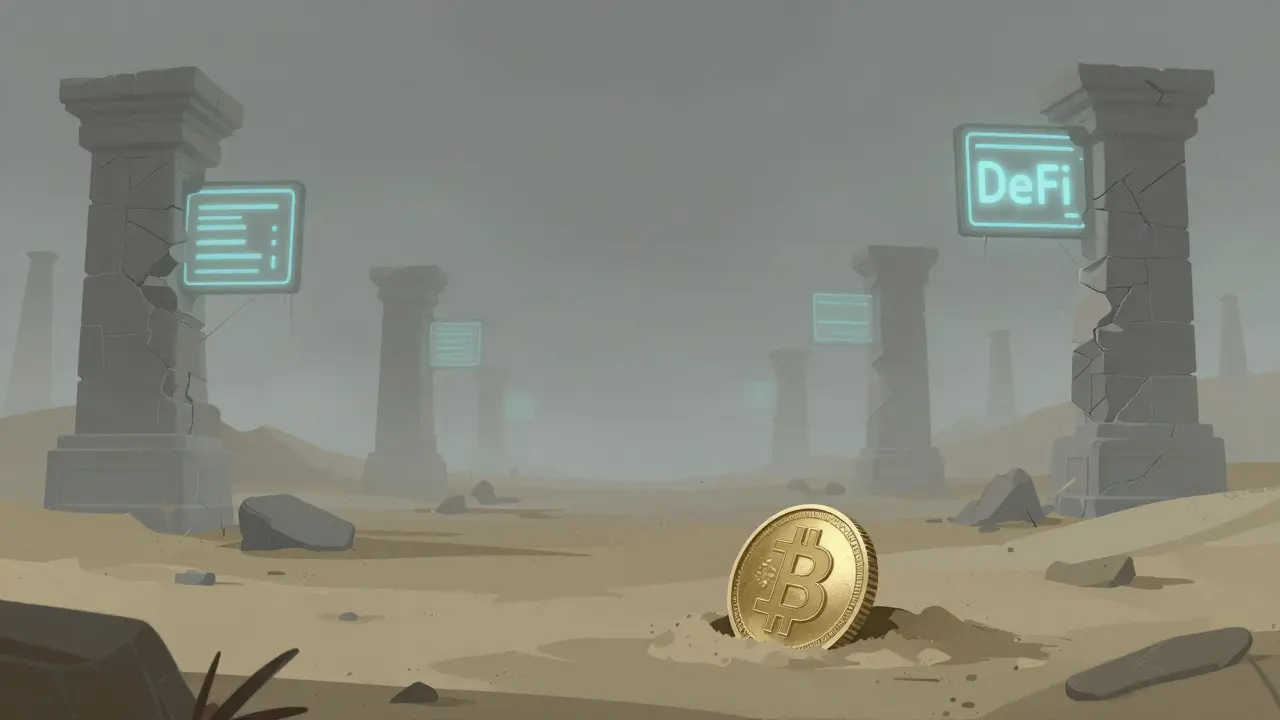
The Red Flags: Why It Failed
If you've tried to use the platform recently, you've probably noticed that nothing works. The failure of Unreal Finance wasn't just about the token price; it was a failure of development. Users reported broken user interfaces (UI) and a complete lack of liquidity in the pools. Imagine trying to trade a contract, but there is no one on the other side of the trade-your transaction fails, and you waste money on gas fees.
Beyond the technical glitches, the lack of communication was the final nail in the coffin. The project's Medium blog, Discord, and Telegram channels have been silent since 2021. In the crypto world, silence from the developers usually means the project has been abandoned. There are no updates on GitHub, no new roadmap items, and no one answering community questions. For a project that raised over $3 million, this level of abandonment is a cautionary tale for any crypto investor.
Current Status and Final Verdict
Is it possible to buy UGT now? While some guides might mention using the Binance Web3 Wallet, the lack of trading volume makes it practically impossible to acquire or sell the token in any meaningful amount. It has become an illiquid asset, meaning you might hold the tokens, but there is no one willing to buy them from you.
Unreal Finance serves as a reminder of the 2021 DeFi boom, where many projects launched with high-concept whitepapers and massive funding but failed to build a product that actually worked. The project is effectively dead, and the UGT coin is now a digital souvenir of a failed experiment in yield derivatives.
Is Unreal Finance (UGT) still active?
No, Unreal Finance is widely considered a defunct project. There has been no developer activity, social media updates, or significant trading volume since late 2021.
Can I still trade UGT tokens?
While UGT may still be listed on some tracking sites, the trading volume is nearly zero. This means there is almost no liquidity, making it extremely difficult to buy or sell the token.
What happened to the money raised during the ICO?
The project raised approximately $3.15 million across several rounds. However, because the project was abandoned and the developers stopped communicating, there is no public accounting of how those funds were spent or why the product was never finished.
What is a yield future in DeFi?
A yield future is a derivative contract that allows a user to lock in or speculate on the future interest rate of a DeFi lending protocol. It allows users to hedge against the risk of falling interest rates.
Are there any alternatives to Unreal Finance?
Yes, Pendle Finance is currently the most prominent and successful platform offering yield tokenization and yield trading capabilities.
It is just common sense that these projects fail when they lack a real product. People just wanted easy money without doing any actual work. It is honestly embarrassing how many people fell for this simple trap. I saw this coming from a mile away because the fundamentals were never there. You cannot build a financial empire on nothing but a whitepaper and a dream. It is simply a matter of basic logic that this would crash. Most investors are just lazy and do not read the fine print. This is exactly why the market needs more discipline and fewer gamblers. The outcome was inevitable from the start. It is sad but true that greed always wins over reason. We should have known better. This is a classic case of overhyping something that does not exist. The math just does not add up. It is a shame that some people still think this is a surprise. Truly a textbook example of failure.
They took the money and ran
The big banks probably told them to shut it down so they could keep control of the rates. It is all a big lie anyway.
Pendle is way better anyway.
It is interesting how the transition from a working concept to a defunct asset happens so quickly in the DeFi space. I wonder if the developers actually attempted to pivot or if they simply vanished without a trace.
who cares about some dead coin lol just buy something that actually moves and stop crying over 2021 fossils
The sheer audacity of the developers to vanish after securing millions in capital is almost impressive in its cynicism. It is a masterclass in the opportunistic nature of the current financial epoch. Only the most naive would believe this was a technical failure rather than a calculated exit.
A truly exquisite tragedy of errors 💅. The technical incompetence was simply breathtaking, an absolute symphony of failure that only a true degenerate would admire. Imagine raising three million dollars just to let your UI rot in the digital wasteland 🙄. Absolutely gauche.
such a wild ride for anyone who was there in the beginning! it is a bit of a bummer but hey that is just the spicy side of crypto life
Only idiots invest in projects with zero liquidity. If you lost money here, you deserved it for being a lazy investor who doesn't know how to read a chart!
I would like to suggest that individuals interested in yield trading focus their attention on Pendle Finance, as it provides a more stable and transparent framework for these operations.
It is a great learning experience for everyone. We can all see how important a working product is over a fancy whitepaper. Stay positive and keep learning!
honestly this was a garbage project from day 1. the dev team were basically amateurs playing with other peoples money. classic rug pull vibes even if it wasnt an official one.
I am utterly heartbroken for the investors who believed in this vision!! It is truly a tragedy of monumental proportions that such an innovativve idea could be squandered so recklessly!!
One must consider the importance of due diligence in these matters. :)
absolute trash project. imagine thinking these clowns could innovate something better than the american way of doing business. total joke
Properly gutted project. Absolute shambles.
It is a tough pill to swallow, but this is how we grow as a community. Use this as a roadmap of what not to do when choosing your next project.
Keep your heads up everyone! 🚀 There are always new opportunities in this crazy market! 💎✨
so sad for the people who lost everything