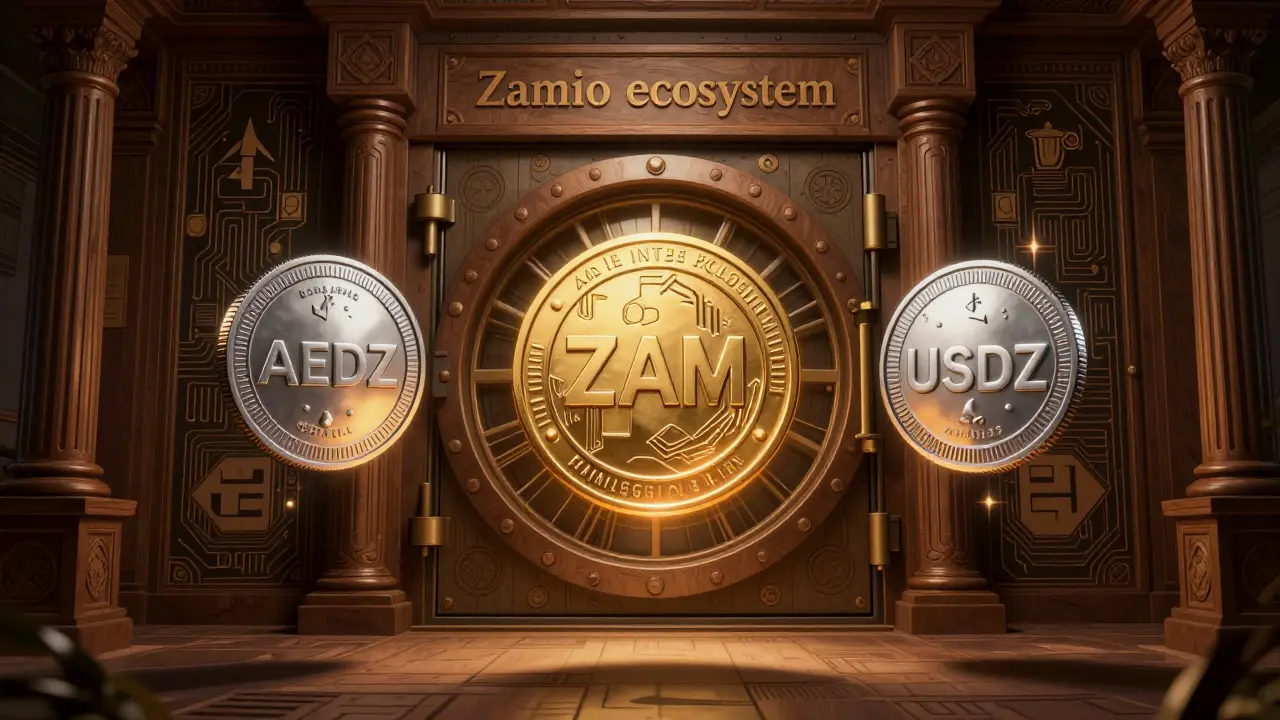
Most crypto airdrops feel like a lottery where you hope for the best and usually get nothing. But the Zamio (ZAM) Token is the native utility and governance token of the Zamio DeFi ecosystem, designed to facilitate expert-managed investment portfolios and phone-number-based transfers. Also known as ZAM, it operates alongside stablecoins AEDZ and USDZ. airdrop isn’t just about handing out free coins to random wallets. It’s a strategic move by a project that wants to bring traditional equity into decentralized finance. If you’ve been watching the DeFi space, you know that "free" tokens often come with strings attached-or worse, they’re scams. So, how do you actually get your hands on ZAM tokens right now? The answer lies in two specific campaigns running through major platforms: MEXC and CoinMarketCap.
You might be wondering why this matters. Well, Zamio isn’t just another meme coin project hoping for a viral moment. Their goal is ambitious: transferring 1% of the world’s equity into decentralized finance. That means they are building tools for real investing, not just speculation. To make this work, they need users who understand value, not just bots farming rewards. This guide breaks down exactly how these current airdrops work, what you need to participate, and whether the potential payout is worth your time.
Understanding the Zamio Ecosystem and Tokenomics
Before you rush to click "claim," you need to understand what you’re actually getting. The Zamio ecosystem is built on a tri-token system. You have the ZAM token, which is the primary governance and utility asset used within the Zamio platform for voting, staking, and accessing premium features. Then there are two stablecoins: AEDZ, which is a stablecoin pegged 1:1 to the United Arab Emirates Dirham, providing stability for users in the Middle Eastern market, and USDZ, which is a stablecoin pegged 1:1 to the US Dollar, allowing for seamless trading and holding without volatility risk.
Why does this structure matter for an airdrop? Because it shows intent. Most projects drop one token and run. Zamio is building infrastructure. The ZAM token gives you access to ready-made investment portfolios created by experts. Imagine having a managed fund, but instead of dealing with bank fees and paperwork, you’re using a wallet that lets you send tokens via phone numbers. That’s the utility behind the token. When you claim ZAM through an airdrop, you aren’t just getting a speculative asset; you’re getting a key to a system that aims to simplify DeFi investing for regular people.
The reference price for ZAM is currently set at $0.23 per token. While this doesn’t guarantee future value, it helps you calculate the potential size of your reward. In a market that often sees new tokens launch with high volatility, having a clear initial valuation metric can help you decide if the effort required to earn the airdrop is justified.
The MEXC Kickstarter Campaign: Voting for Rewards
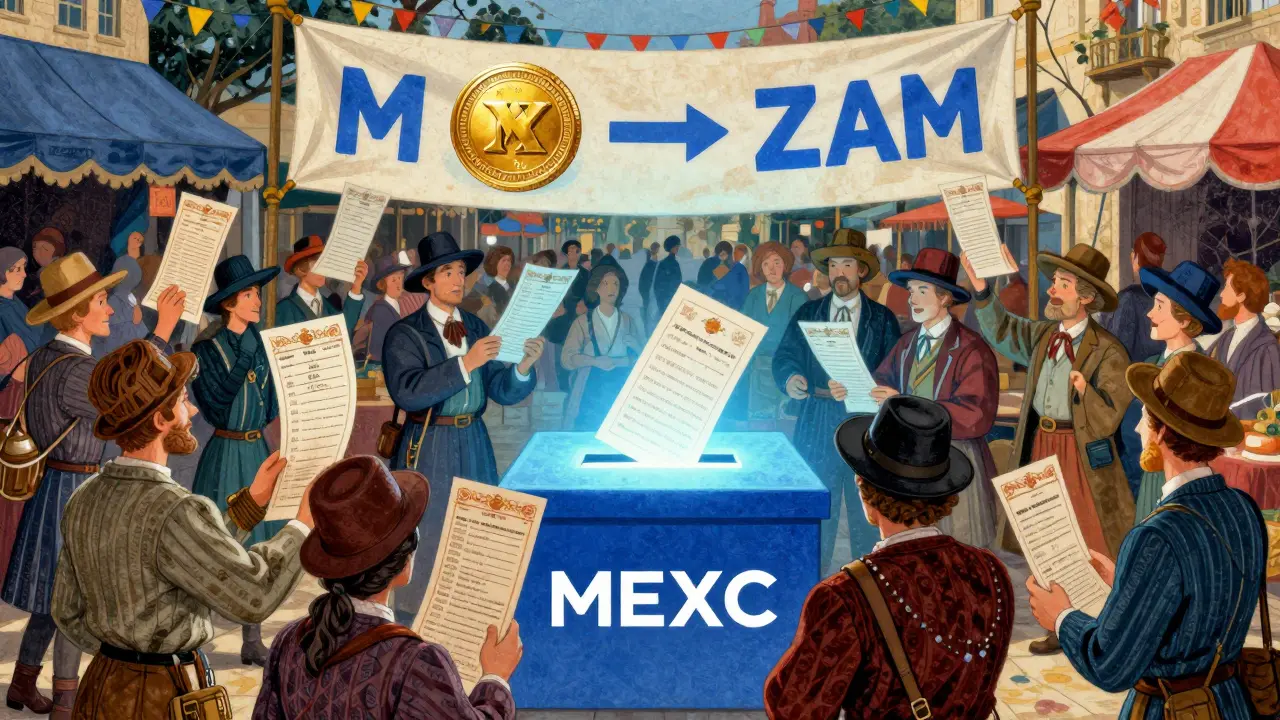
The most significant opportunity to acquire ZAM tokens right now comes through the MEXC Kickstarter, which is a community-driven voting initiative on the MEXC exchange that allows users to vote for new projects using MX tokens to unlock airdrop rewards. campaign. This isn’t a simple "sign up and get paid" deal. It requires active participation from the MEXC community.
Here is how it works:
- Total Reward Pool: There are 160,000 ZAM tokens up for grabs.
- Voting Mechanism: You use MX tokens, which are the native utility token of the MEXC Global cryptocurrency exchange, used for fee discounts, voting, and participating in Kickstarter events. to vote for Zamio.
- Voting Cap: You can use a maximum of 500,000 MX tokens per person to vote. This cap is crucial because it prevents "whales" (users with massive holdings) from dominating the entire reward pool alone.
- Cost: The tokens themselves are distributed at zero cost to participants, but you need to hold MX tokens to cast your vote.
If you look at the math, 160,000 ZAM tokens at $0.23 each equals a total theoretical value of $36,800. That’s a substantial marketing budget being distributed directly to users. However, remember that this is a *reference* price. Actual trading value may differ once the tokens hit the open market.
To participate, you need an account on MEXC and enough MX tokens to make your vote count. The more MX you lock in for voting, the higher your chance of receiving a larger share of the ZAM distribution. This creates a symbiotic relationship: MEXC gets engagement, Zamio gets visibility, and you get potential rewards. It’s a win-win-if-you-actually-do-the-work scenario.
CoinMarketCap NFT Airdrop: A Different Approach
While MEXC focuses on fungible tokens, CoinMarketCap, which is a leading online resource and marketplace for cryptocurrency prices, charts, and information, owned by Binance, is running a parallel campaign with a twist. Instead of sending out thousands of small token amounts, they are distributing exactly 88 NFTs to 88 winners.
This is a one-to-one distribution model. One winner, one NFT. Why 88? In many Asian cultures, particularly Chinese culture, the number 8 is considered extremely lucky. It sounds like "prosperity" or "wealth." By choosing 88, Zamio is likely signaling its intent to capture attention in key Asian markets where crypto adoption is high and cultural numerology influences consumer behavior.
What do you get with these NFTs? They aren’t just JPEGs. They are likely tied to utility within the Zamio ecosystem. Perhaps they grant early access to certain portfolio features, lower transaction fees, or exclusive governance rights. Since the details on exact utility are still emerging, this campaign feels more like a prestige play. It’s about rewarding super-fans or highly engaged users who complete specific tasks on CoinMarketCap.
If you want in on this, you need to keep an eye on CoinMarketCap’s official announcements and task lists. Unlike the MEXC vote, which is ongoing and proportional, this is a fixed-reward contest. The barrier to entry might be higher, but the exclusivity could mean higher long-term value for the NFT holder.
Comparing Zamio’s Strategy to Other 2025-2026 Airdrops
Not all airdrops are created equal. In recent years, we’ve seen projects like Paradex Foundation allocate 20% of their supply to genesis users, or Layer 2 networks rewarding early testnet testers. Those were often retroactive-you did something in the past, and got rewarded later. Zamio is different.
| Feature | Zamio (ZAM) | Typical Retroactive Airdrop |
|---|---|---|
| Participation Type | Active (Voting/Task Completion) | Passive (Historical Usage) |
| Platform Dependency | High (Requires MEXC/CoinMarketCap accounts) | Low (Often direct to wallet) |
| Token Utility Focus | DeFi Equity & Portfolio Management | Network Security/Governance |
| Farming Resistance | High (Requires MX tokens or specific tasks) | Low (Easy to farm with bot farms) |
| Stablecoin Integration | Yes (AEDZ/USDZ) | Rarely |
Zamio’s approach reduces "airdrop farming." You know those bots that interact with hundreds of protocols just to snag free tokens and dump them immediately? Zamio makes that harder. By requiring MX tokens for voting, they ensure participants have some skin in the game. By limiting the NFT count, they create scarcity. This suggests that the ZAM token holders will likely be more committed to the project’s long-term success, which is good for everyone involved.

Risks and Realistic Expectations
Let’s keep it real. No one should invest money or time expecting guaranteed profits. The $0.23 reference price is just that-a reference. Once these tokens start trading, market forces take over. If demand is low, the price could drop. If the project fails to deliver on its promise of bringing equity to DeFi, the value could vanish.
Also, consider the tax implications. In many jurisdictions, including the US, receiving airdropped tokens is considered taxable income at fair market value on the day you receive them. Selling them later triggers capital gains taxes. Keep records of your MEXC voting activity and any NFT receipts. You don’t want surprises when tax season hits.
Another risk is security. Always verify you are on the official MEXC or CoinMarketCap sites. Scammers love to create fake airdrop pages that look identical to the real thing. Never connect your main wallet to unknown links. Use a burner wallet if possible, especially for interacting with new smart contracts.
Next Steps for Participants
If you’re ready to try your luck, here is your checklist:
- For MEXC Users: Ensure you have MX tokens in your account. Go to the Kickstarter section, find Zamio, and vote. Remember the 500,000 MX cap. Check the terms to see if your vote needs to be locked for a specific duration.
- For CoinMarketCap Users: Look for the official Zamio campaign page on CMC. Complete the required social media follows or quiz tasks. Keep an eye on your email for the NFT minting instructions.
- Wallet Prep: Make sure your wallet supports ERC-20 tokens (assuming ZAM is on Ethereum or a compatible L2) and has enough gas fees to receive and transfer the tokens later.
- Stay Updated: Follow Zamio’s official Twitter and Discord. Don’t trust random DMs. Official announcements will come through verified channels only.
The beauty of Zamio’s strategy is that it aligns user acquisition with actual product interest. By forcing you to engage with MEXC or CoinMarketCap, they are filtering for users who are already active in the crypto space. If you’re one of those users, this airdrop is worth your attention. Just stay cautious, do your own research, and never bet more than you can afford to lose.
How much is the Zamio (ZAM) token worth?
The current reference price for the ZAM token is $0.23. However, this is an estimated value used for calculating airdrop pools. The actual market price may vary significantly once trading begins on exchanges.
Do I need to buy MX tokens to get the ZAM airdrop?
For the MEXC Kickstarter campaign, yes. You need to hold MX tokens to vote for Zamio. The amount of ZAM you receive is generally proportional to your voting power, up to a cap of 500,000 MX tokens per user.
What is the difference between ZAM, AEDZ, and USDZ?
ZAM is the volatile governance and utility token. AEDZ is a stablecoin pegged to the UAE Dirham, and USDZ is pegged to the US Dollar. The stablecoins provide price stability for transactions within the Zamio ecosystem, while ZAM is used for governance and accessing premium features.
Is the CoinMarketCap airdrop for tokens or NFTs?
The CoinMarketCap campaign is distributing 88 unique NFTs to 88 winners. This is distinct from the MEXC campaign, which distributes 160,000 fungible ZAM tokens. The NFTs likely offer special utility or status within the Zamio ecosystem.
When will the Zamio airdrop tokens be distributed?
Distribution timelines depend on the specific campaign rules. For MEXC, tokens are typically distributed after the voting period ends. Check the official MEXC Kickstarter page for the exact end date and distribution schedule. Always rely on official announcements for timing.
Is Zamio a safe project to participate in?
Zamio partners with established platforms like MEXC and CoinMarketCap, which adds a layer of legitimacy. However, all crypto investments carry risk. Do your own research, never share your private keys, and be wary of phishing scams pretending to be official airdrop pages.