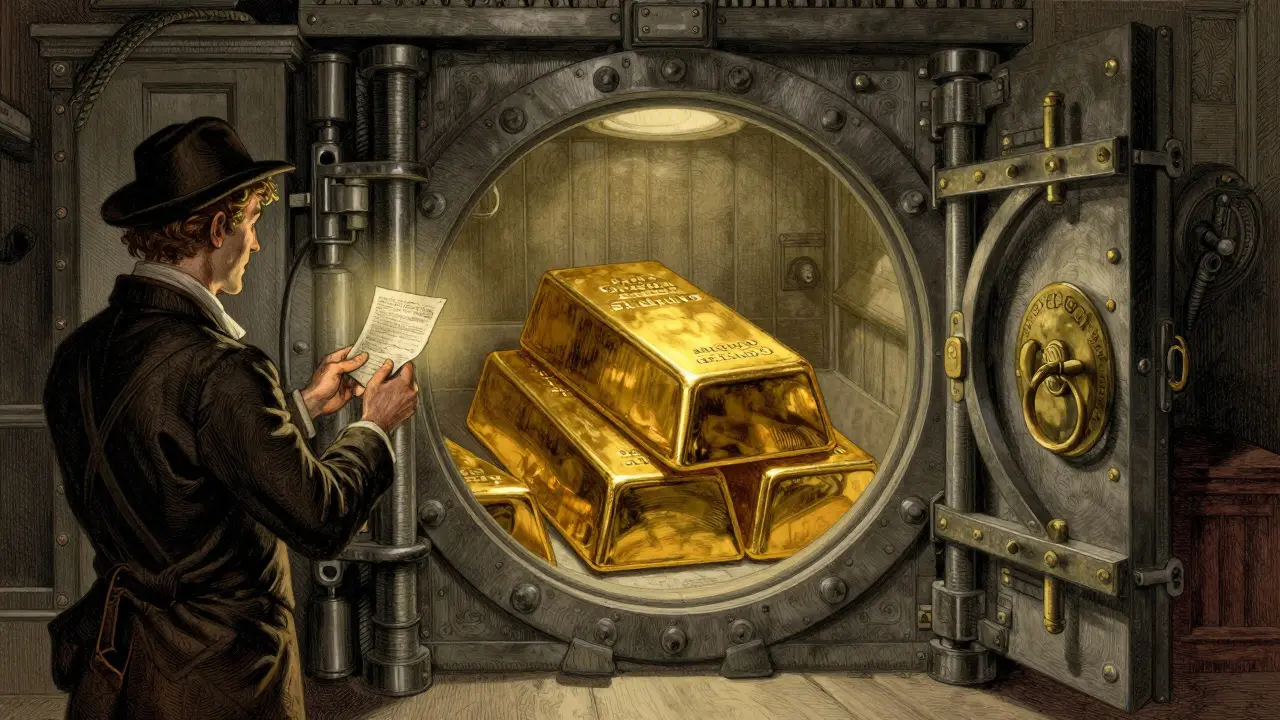
Imagine you own a valuable gold bar locked in a vault in London, but you want to trade it on a marketplace in New York. You can't just move the physical metal instantly; you need a ticket that proves ownership of that gold while you're away. In the blockchain world, this exact scenario plays out daily between Bitcoin and Ethereum.
You might hold Bitcoina decentralized digital currency created by Satoshi Nakamoto in 2009, but you want to use it on Ethereum-based lending apps. This is where things get complicated. This conflict leads to two distinct asset classes: wrapped tokens and native tokens. Understanding the difference isn't just technical trivia; it determines whether your assets remain secure or end up exposed to hidden risks.
What Exactly Are Native Tokens?
To understand the "wrapper," you first need to understand the core. A native token is a cryptocurrency that operates directly on its original blockchain without needing adaptation. Think of it as the first-class citizen of its ecosystem.
For example, Bitcoin functions natively on the Bitcoin network. It secures transactions, incentivizes miners, and stores value within that specific chain architecture. Similarly, Etherthe native cryptocurrency of the Ethereum blockchain used to pay for transaction fees lives on the Ethereum network.
- Built-in Utility: They handle gas fees for smart contracts.
- Direct Security: Their security relies entirely on the consensus mechanism of their home chain.
- No Intermediaries: When you send BTC, you don't trust a middleman to issue it on behalf of someone else.
The limitation here is clear: Bitcoin cannot execute complex smart contracts on Ethereum because the underlying code doesn't match. If you try to transfer a native token to a wrong network, it essentially vanishes.
The Concept of Wrapped Tokens
If native tokens are the first-class citizens, wrapped tokens are the visas allowing travel across borders. A wrapped token is a digital representation of a cryptocurrency on a different blockchain than the one it was originally built for. It's essentially a claim check.
The most famous example is Wrapped Bitcoin (WBTC). It exists on the Ethereum blockchain but tracks the price of Bitcoin 1:1. To create WBTC, someone locks actual Bitcoin in a custodian's vault and mints an equivalent amount of ERC-20 tokens on Ethereum. This solves the compatibility gap but introduces a new dependency: the custodian.
Common standards include the ERC-20 standard for Ethereum and BEP-20 for BNB Chain. Without these standardized wrappers, assets stay isolated on their respective silos, limiting how much utility you can extract from them.

How the Wrapping Process Actually Works
It sounds simple-just converting one thing to another-but the mechanics involve a rigorous nine-step process managed by merchants and custodians.
- The user selects an asset to wrap and a target blockchain.
- A merchant receives the native asset from the user.
- The custodian locks the original asset in a secure vault.
- The minting contract creates the wrapped version on the new chain.
- The merchant transfers the wrapped token to the user.
- When ready to exit, the user initiates a redemption request.
- The custodian burns the wrapped token.
- The custodian releases the locked native asset to the merchant.
- The merchant returns the original asset to the user.
This flow ensures that for every unit of wrapped token floating around, there is a corresponding unit of native asset held securely. The integrity of this system hinges on the transparency and reliability of the custodians holding the real goods.
| Feature | Native Tokens | Wrapped Tokens |
|---|---|---|
| Blockchain Location | Own dedicated network | Cross-chain environments |
| Security Model | Decentralized consensus | Relies on custodial solvency |
| Liquidity Source | Native markets only | Interoperable ecosystems |
| Smart Contract Compatibility | Limited to home chain logic | Standard compliant (e.g., ERC-20) |
Risks Associated with Wrapped Assets
Why would anyone worry about something that makes trading easier? Because you are introducing counterparty risk. When you hold a native token, you rely on the blockchain protocol. When you hold a wrapped version, you rely on a centralized entity to honor the conversion.
In August 2022, the Nomad Bridge hack resulted in $190 million in losses of wrapped assets. This event highlighted that while the technology allows seamless movement, the bridges themselves can become single points of failure. Custodians control the private keys to the vaults holding your original assets. If a custodian gets hacked or acts maliciously, your wrapped token becomes worthless paper.
Furthermore, regulatory scrutiny has increased significantly. By mid-2026, compliance requirements for custodians of wrapped assets align closely with traditional financial regulations. This adds a layer of legal protection compared to early days but means more oversight and potential restrictions on anonymity.
When Should You Use Each Type?
Neither option is inherently "better"; it depends entirely on what you are trying to do.
Stick to Native Tokens when:
- You plan to hold long-term.
- Security is your absolute top priority.
- You prefer self-custody without trusting third parties.
Switch to Wrapped Tokens when:
- You need to participate in DeFi protocols like Aave or Uniswap.
- You want to provide liquidity on a specific exchange supported by wrapped assets.
- You are engaging in yield farming that requires ERC-20 compatibility.
Many advanced users keep a split portfolio: the bulk of their holdings in native form for safety, with smaller amounts wrapped for active trading and liquidity provision.
The Future of Cross-Chain Interoperability
We are moving toward a multi-chain future where assets naturally flow between networks. Solutions like Chainlink's Cross-Chain Interoperability Protocol (CCIP) aim to standardize this process using decentralized verification rather than centralized vaults. While wrapped tokens dominate the landscape in 2024-2025, industry projections suggest a shift toward decentralized custody mechanisms by late 2026.
Ethereum improvements are also addressing the need for wrappers. Native ETH support in certain smart contracts reduces the necessity of WETH for some interactions, though the utility of a standardized token remains vital for consistent integration across thousands of applications.
As we look ahead, the distinction might blur further, but for now, understanding the security implications of your choice is the key to keeping your wealth safe while utilizing the full potential of the crypto ecosystem.
Are wrapped tokens always backed 1:1?
Ideally, yes. Reputable issuers maintain a strict 1:1 reserve where every wrapped token represents a locked native asset. However, audits are essential because proof of reserves can sometimes lag behind issuance.
Is Wrapped Bitcoin (WBTC) safer than native Bitcoin?
Generally, no. WBTC introduces centralization risk through custodians managing the Bitcoin vaults, whereas holding native BTC involves direct control via your wallet keys.
Can I lose my funds if I bridge wrapped tokens?
Risks exist during bridging if smart contract vulnerabilities are exploited, as seen in major bridge hacks. Always ensure you are using official portals rather than unauthorized exchanges.
Does Ethereum gas fee apply to wrapping?
Yes, since wrapped tokens typically live on Ethereum as ERC-20 tokens, you must pay gas fees in Ether (ETH) to perform actions like unwrapping or swapping.
What happens to wrapped tokens if the custodian fails?
If the custodian loses the backing assets, the wrapped token could become devalued or unredeemable, depending on the insurance or legal structure governing the wrapper.
You need to focus heavily on the custodial risk associated with wrapping mechanisms instead of ignoring it completely. Trustless systems work best when every step is mathematically verified rather than relied upon human governance. Your portfolio security depends on understanding who holds the private keys backing that digital representation.
lol you sound terrified of the blockchain revolution happening right now 🙄🤡 nobody cares about centralization fears anymore when apes just want yolo gains 💸🚀 stop being such a panic button bro 😤
Stop pretending WBTC isn't a scam waiting to happen and admit the risk is too high for anyone sensible to hold it without insurance.
Your fear-mongering doesn't change the fact that liquidity requires interoperability regardless of what purists want to pretend works perfectly.
The fundamental issue revolves around how bridge protocols handle custody validation internally. We see significant variance in how multisig signers manage keys across different jurisdictions. Regulatory pressure forces some custodians to freeze assets upon government request notices. Wrapped tokens effectively become IOUs backed by collateral held elsewhere entirely. Native tokens operate natively without needing external redemption guarantees from third parties. Liquidity fragmentation remains a persistent headache for market makers attempting deep pools. Arbitrage opportunities close quickly unless bot latency allows for profitable execution windows. Flash loan attacks exploit temporal gaps during the verification of cross-chain transfers often. Smart contract reentrancy bugs remain possible even after multiple audit reports are published. Governance tokens grant voting rights that could alter protocol parameters without user consent. Unaudited code upgrades pose existential risks to the integrity of the wrapping mechanism itself. Transaction malleability creates confusion regarding finality status during periods of congestion. Gas wars on mainnet networks increase the cost basis for depositing collateral repeatedly. Slashing conditions for validators act as deterrents against malicious behavior theoretically speaking. Network forks can invalidate assumptions made about chain state consistency during hard changes.
That is a very detailed breakdown of the technical risks involved here. It helps to understand the architecture before diving into the liquidity markets blindly. Keep studying these patterns because they define the safety of your holdings.
I've been testing out a few of these bridges lately and the UX is actually improving fast. The gas costs are killing me though on ETH right now. Does anyone else feel like the fee structure is just unsustainable for smaller players?
I think you should try layer two solutions to help lower those transaction costs. It makes trading much easier when fees are low. Stay optimistic about the tech progress. Many people struggle with the same issues you mention. You can find cheaper ways to move funds.
idnt thnk this matters much for regular folks tbh its fine
It actually matters quite a bit depending on where you keep your money stored. Please take these security warnings seriously so you do not lose funds later. We want everyone to stay safe in this space together.